Providenciales Kiteboarding
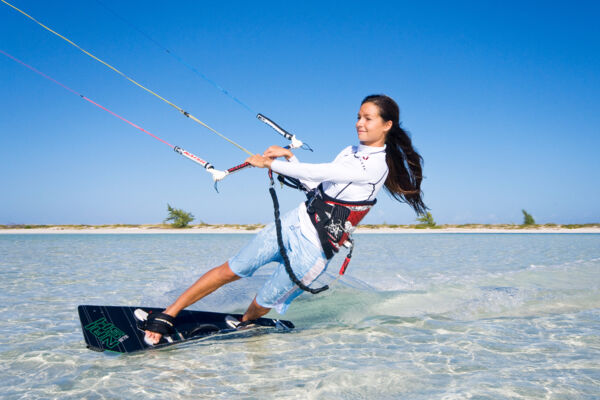
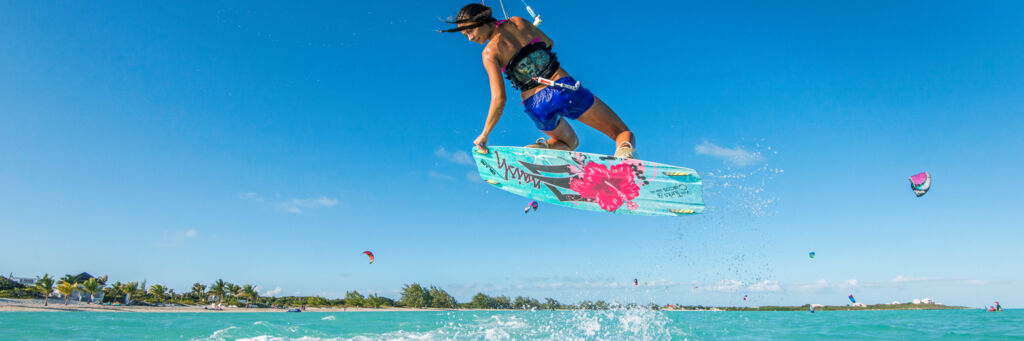
Kiteboarding (or kitesurfing) is a popular water sport in the Turks and Caicos Islands and Providenciales is the mecca for learning or practicing the sport. Nearly all Turks and Caicos kiteboarding schools and tour companies are based on this island.
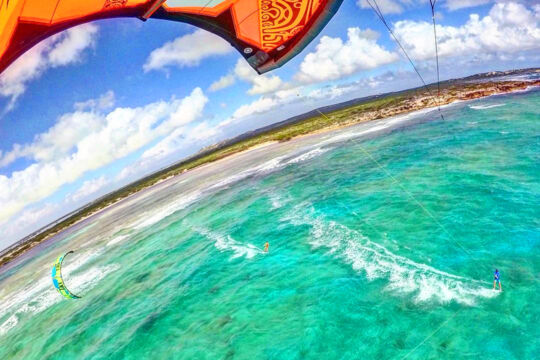
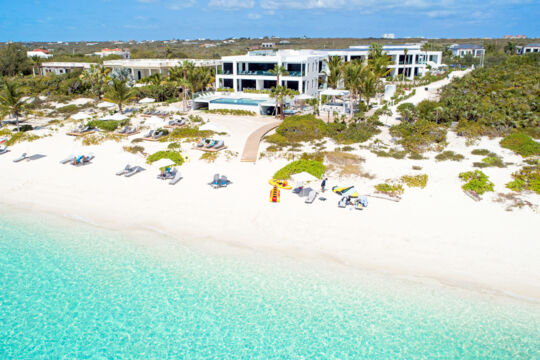
Provo is also home to beautiful Long Bay Beach—one of the best places in the Caribbean to learn the sport. Dozens of kites can be seen in the air on a windy day at this coastline, where the shallow water and fairly predictable onshore winds make it an excellent classroom. There's even a dedicated water sports resort on the beach with its own kite school: H2O Resort.
The channels and lagoons of several nearby uninhabited cays are wonderful locations for those with more experience. While some people choose to bring their own gear, you can also rent gear from several local shops.
Turks and Caicos Kiteboarding Lessons
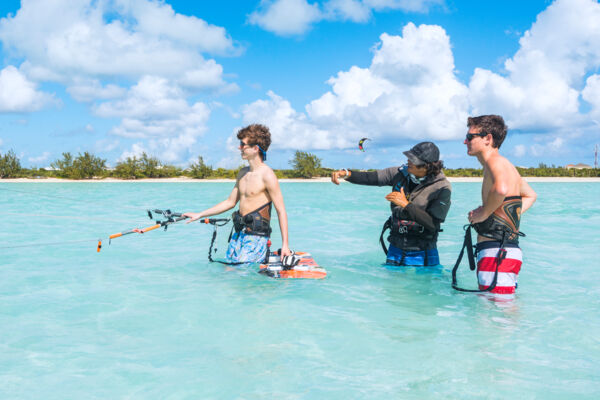
There are several Turks and Caicos kiteboarding schools with IKO-certified (International Kiteboarding Organization) instructors that teach lessons for beginners and provide expert instruction for more advanced riders. Some schools also offer lessons for wing foiling or wing boarding (riding a hydrofoil board while holding onto a large wing to catch the wind).
Individual lessons are usually 2–3 hours and initially involve learning how to fly a small trainer kite. Once the student masters the basics, they'll go out on the water to refine their technique under the close watch of an instructor (often following along on a jet ski).
Beginners typically start learning to kite downwind and later progress to kiting upwind. Many schools offer discounted packages for 9 hours of instruction and up that you can complete over several days. Invest in a package and minimize gaps between lessons if you want to learn the sport more quickly—you'll better retain your knowledge and keep your skills sharp.
While it varies by company, the minimum age to kiteboard is typically 10 years old.
Lesson Prices
Private kiteboarding lessons start at around $175 an hour (2026 price). It's not usually possible to book lessons by the hour in Turks and Caicos—most companies require that you sign up for at least 2 hours of instruction per session.
Some schools offer semi-private lessons that can bring down your hourly costs to around $150 per hour. Complete beginner packages that take place over several days run at about $1,000–1,800.
Lessons through the local schools include all necessary gear as well as instruction. Mandatory 12% Government Tourism Tax may or may not be included in the base price.
Gear Rentals
The Providenciales kite schools also rent equipment, but you'll need to demonstrate proficiency first (some businesses charge extra for a basic test). They may accept a certification card from an internationally recognized certifying body like PASA or IKO as proof.
Rates are typically around $200 per day for your board, harness, and lines, or around $800 per week.
Expeditions and Tours
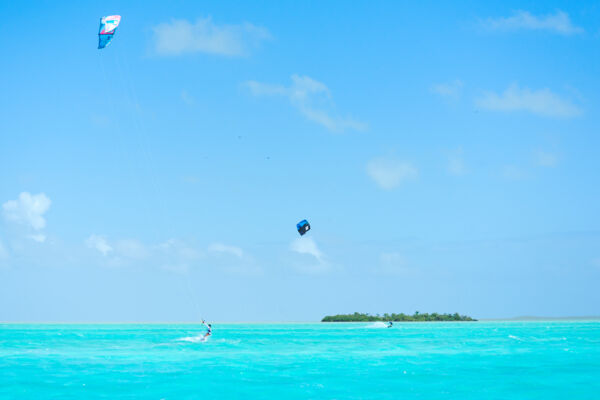
Kite safaris may simply visit remote and incredible locations only accessible by boat, or can be downwind expeditions that lead through the uninhabited Caicos Cays back to Providenciales.
On the way down through the crystal-clear shallows and along the pristine cays, you’ll often spot interesting wildlife like lemon sharks, stingrays, turtles, birdlife, and the occasional dolphin.
The duration of these tours depends on the trip but can range from 2-hour downwinders to 8-hour full-day charters. Location depends on the day's wind.
Booking and Reservations
This sport is completely dependent on wind. If the wind simply isn't blowing (you usually need at least 12 knots of wind), the local schools will typically reschedule you at no charge for the next possible day.
It’s best to book direct with the school versus a third party. Along with usually getting the best price, wind conditions can change, and booking direct can make it easier to adjust your reservation.
The water sports shop at H2O Life. Style. Resort. is currently the main retail shop for kiting equipment on Providenciales.
Providenciales Kiteboarding Locations
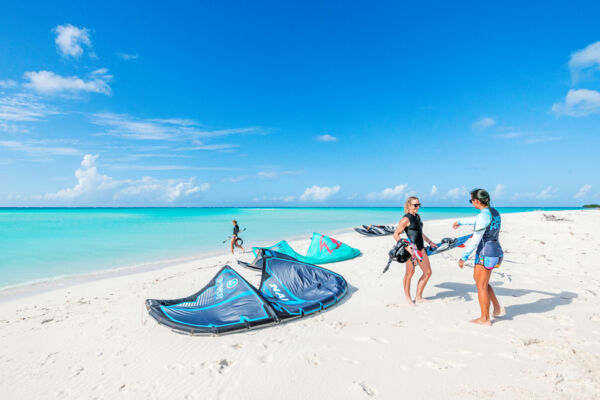
There are currently no laws or regulations against kiteboarding on any beaches in the country. Due to the spectacular setting and safe environment, kite newcomers to the Turks and Caicos should start at Long Bay, regardless of skill level.
Long Bay Beach
Long Bay is the best kiting spot on Providenciales. The Turks and Caicos typically gets an east-southeast wind, to which Long Bay is directly exposed. The water here is consistently shallow with a clean sandy bottom, which makes it a fantastic spot for newcomers to the sport. The typical depth is waist-deep and can be quite shallow at low tide.
It gets quite busy at Long Bay on windy days, and it’s not uncommon to have more than 20 riders out on the water.
Several rental villas and a few resorts on this coast allow you to stay right onsite.
Leeward Going Through
Leeward Going Through at the northeast point of Leeward Beach can be good for those who like to explore, as many small cays and coves are found to the east. Due to currents and boat traffic, this area is not recommended for beginners. When the ocean swell is higher than usual, the best wave-riding spot easily accessible from shore on Providenciales is found a little west of the point.
Grace Bay Beach
Grace Bay usually isn’t the best beach for kitesurfing due to the typical east-southeast winds. Unlike Long Bay, the water here quickly becomes too deep to stand, and tall resorts near the beach can cause wind disruptions.
The best kiting spot in the area is found off the Grace Bay Forbes Point access next to The Sands Resort. Grace Bay is the busiest coast on the island, so beware of boats and people.
The Bight Beach
As with Grace Bay, the wind is typically offshore at the Bight Beach. However, due to lower building density, wind obstructions are less of a problem. Crowds and boats are also less of an issue, but are still possible, especially around the beach's popular snorkeling sites.
Everything considered, this location is not recommended for beginner kiteboarders. The Children’s Park access area has the widest beach and the fewest kite hazards.
Places to Avoid
Chalk Sound National Park is highly scenic but is not great for kiteboarding. Because this lagoon is surrounded by hills and buildings, the wind is usually gusty. Also, nearly the entire coastline here is razor-sharp ironshore rock. It is difficult to launch and land, and your gear will very likely be destroyed if you crash.
Northwest Point, Malcolm’s Road Beach, and West Harbour Bluff are also beautiful locations, but they typically have offshore wind and are often deserted. If you have any problems, you could drift until you hit the Bahamas.
More Turks and Caicos Kiteboarding Locations
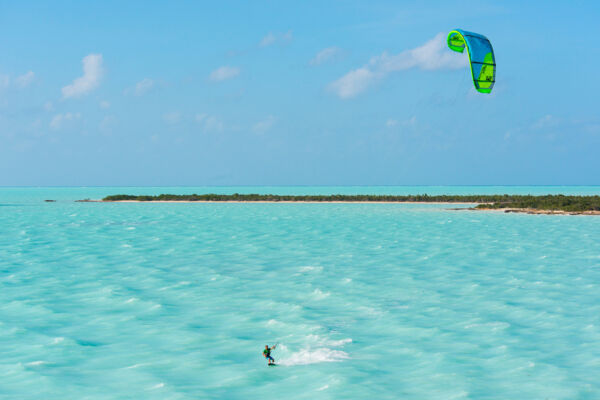
Heading to North and Middle Caicos for a day trip can be a great way to kite at some beautiful deserted spots. Although North Caicos has some great beaches, Middle Caicos has more interesting kiting locations.
There are no kiteboarding companies based on North Caicos or Middle Caicos, so if you're not visiting these islands with a Providenciales kiteboarding company, you'll need to arrange your own transportation and gear. See Day Trip to North Caicos and Middle Caicos for helpful tips.
Bambarra Beach
Bambarra Beach offers the tamest conditions, with clean shallow water. Casuarina trees (sometimes locally called “cedar trees”) grow along the beach thickly, so be careful when launching and don’t crash.
Conch Bar Beach
The stunning Mudjin Harbour and Conch Bar Beach can have large waves and, together, are a location that most kiters never forget. However, they're only suitable for advanced kiteboarders. Along with rough conditions, much of the coast is painfully sharp ironshore rock, and it can be very difficult to get back to your starting point if you are blown downwind.
Cedar Point
The remote Cedar Point and Wild Cow Run can be amazing locations. A shifting sandbar forms a sheltered flat-water lagoon in this area, and the turquoise water east to Dickish Cay and Joe Grant Cay is highly scenic.
Typical Conditions
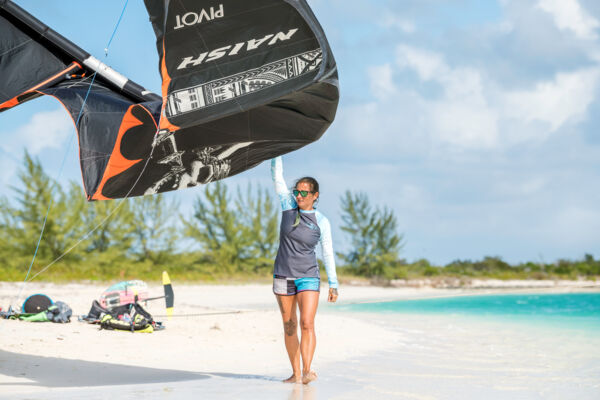
The most predictable and consistent winds on Providenciales are the east-southeast trade winds. The islands typically experience this wind on and off over the year, but it’s usually a bit more pronounced and regular in the winter months. During the summer months, conditions tend to alternate between perfect breezy kiting days and completely calm windless conditions.
Squalls and regional storms occasionally cause different wind directions, which make north and west coast locations more viable. However, these winds are uncommon and unpredictable.
Kiteboarding Season
Purely from a kiter’s perspective, November through May probably offers the best wind. Keep in mind that the average wind difference from month to month isn't very significant, so it's still possible to experience top conditions at any time of year. Common conditions range from 15 to 20 knots out of the southeast.
Sargassum
The summer months tend to bring increased sargassum to the south coast beaches of Providenciales (including Long Bay Beach). Seaweed mats can be annoying and at times unavoidable in the water. Some parts of the beach are raked clean by a few resorts, but it's something to be aware of. Sargassum usually improves and is largely absent during the winter months (peak Turks and Caicos kiteboarding season).
Wave Riding and Surfing
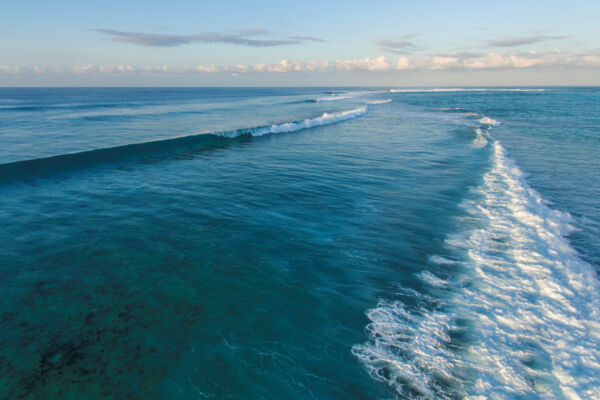
When the Turks and Caicos experiences a larger-than-usual ocean swell, several spots around Providenciales become decent wave-riding locations.
The easiest wave location to access is a small area found off Leeward Beach, a little west of the Leeward Going Through access. Here, 3–6 foot (1–2 m) waves break a few hundred feet from the beach when there is an ocean swell. Due to the absence of coral or rocks, this is the best spot for someone unfamiliar with the island.
Cuts along the barrier reef located on the north side of Providenciales typically offer waves of 2–4 feet (0.6–1.2 m). During storms, the swell rises up past 10 feet (3 m). Depending on the wind direction, the reef is a five-minute tack out. A safety boat should be present, and caution should be taken when riding the reef as the changing tides may expose coral. Be sure to let someone know when you go out.
Northwest Point can also have large waves. However, due to the winds almost always being offshore, the coral and rocks in the water, and the difficulty of access, Northwest Point is suitable only for experienced riders familiar with the area.
Kiteboarding Equipment
You'll need the following equipment to kiteboard in the islands. Gear is usually provided if you've signed up for a tour or lessons with a local company, or is available for rent through most kite schools. The typical setup is a large specialty kite, a harness that attaches it to the person, and a board, of which there are several basic types.
The Kite
This is the primary piece of equipment. The most common and easiest-to-fly type is the inflatable kite (also known as a ‘tube kite’), which has an inflatable bladder on the leading edge for rigidity and buoyancy. Foil kites are also occasionally used on the water, mainly for low-wind conditions.
The Board
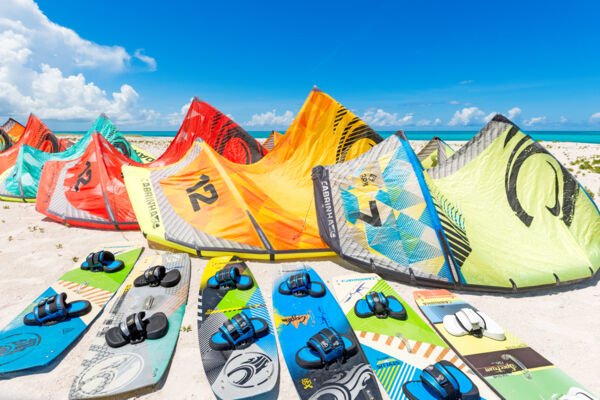
Kiteboarding boards are made specifically for kiting, and are not borrowed from other water sports. There are three basic types and many hybrid styles.
The basic twin tip board is by far the most common variety. It’s the easiest to ride, it’s simple to change directions when riding, and it has foot straps, so it’s likely to stay on your feet. Twin tip boards are not typically large, yet there are training and light-wind models when additional buoyancy is needed.
Strapped or strapless surf-style boards are also popular, yet take more skill and training to appreciate.
Foil boards are the latest evolution. As their name suggests, these boards have foil wings, much like a hydrofoil boat, which lift you out of the water when traveling at speed. Foils have by far the steepest learning curve, yet when mastered offer a surreal experience, with unrivaled speed, smoothness, and quietness.
The Harness
The third critical piece of equipment is the harness. Harnesses are typically simple in design, and essentially redistribute the power of the kite to the person, so there’s not a constant strenuous fight. As may be expected, harnesses incorporate a quick release in case of emergency.
No Wind Activities
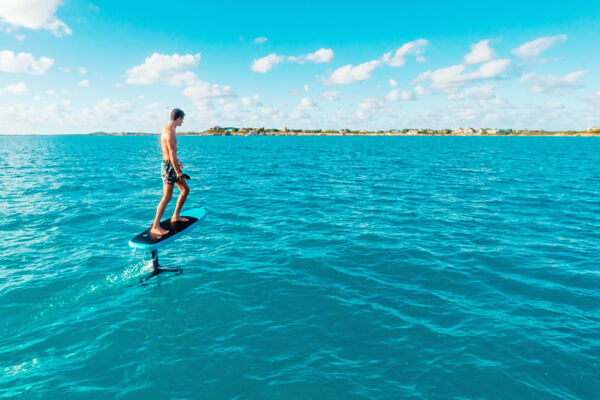
The Turks and Caicos typically experiences consistent east-southeast trade winds, yet there are flat days.
A fun sport to try if wind conditions aren't cooperating is e-foil surfing. This sport is most fun on flat no-wind days. E-foils are small boards that are powered by electric motors, and have a mast and foil much like a kite foil board. If you haven’t tried foil boards, e-foiling offers an easy foray into using foils, which can be very difficult to learn with kites.
Lessons and hourly rentals are available on Providenciales.
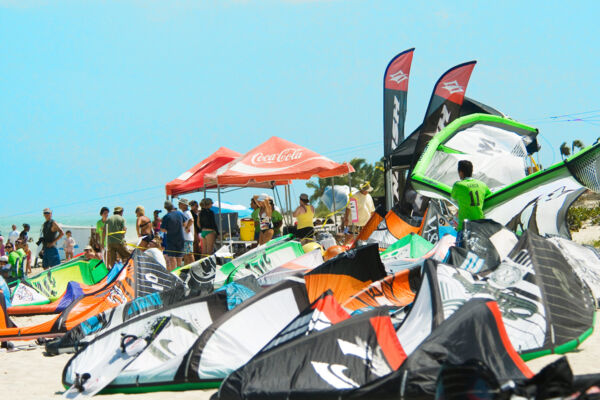
Annual Windvibes Kiteboarding Tournament
For 10 years, Hope LeVin and the Turks and Caicos kiteboarding community hosted the Windvibes Kiteboarding Tournament. This had been an annual event on Providenciales since 2007. Originally just kiteboarding, the competition eventually expanded to include kayak and SUP racing, windsurfing, log-throwing contests, and tug-of-war.
The last Windvibes was held in 2016 and the event has been discontinued.
Nearby Caribbean countries, such as the Dominican Republic, host their own kiteboarding tournaments.
Turks and Caicos Kiteboarding Schools