Turks and Caicos Kiteboarding Guide
Kiteboarding Guides By Island
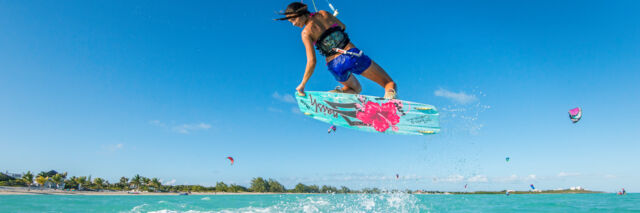
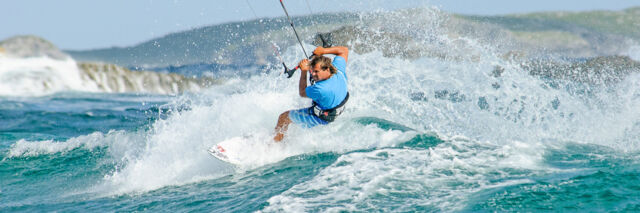

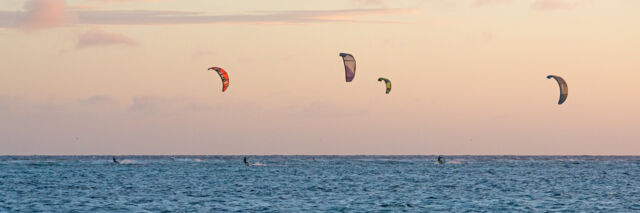
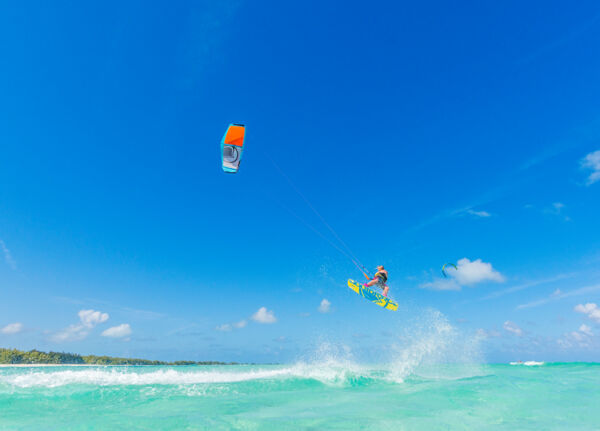
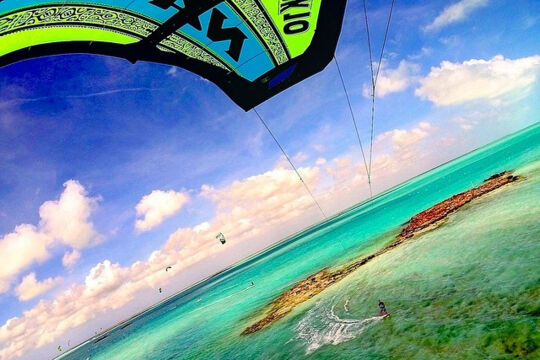
Turks and Caicos is one of the best kiteboarding destinations in the tropical Atlantic and Caribbean. This isn’t a surprise, considering the territory's exquisite clear and shallow water and the forgiving sandy ocean floor of the country’s top kitesurfing spots.
The island of Providenciales is the central hub for kiteboarding. Here, you will find nearly all of the Turks and Caicos kiteboarding schools, most of the local kiteboarders, and the country's best kiteboarding location (Long Bay Beach).
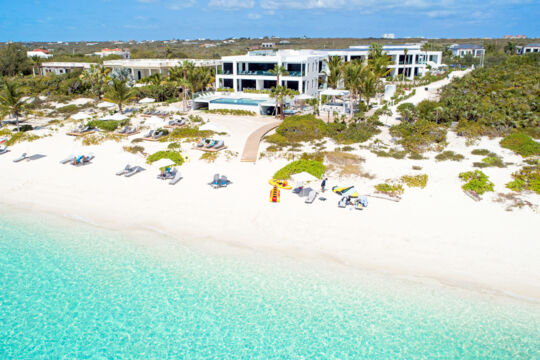
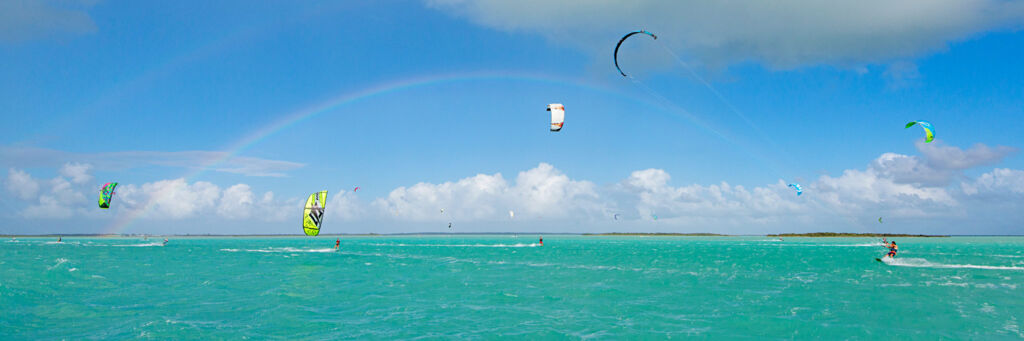
Most areas of Long Bay are only waist-deep, making it perfect for beginners and equally enjoyable for advanced riders. Using a foil is typically only possible at high tide, as the water is too shallow at low tide. Many kiteboarders choose to stay at the various rental villas located on this beach or at H2O Resort, a water sports resort and kiteboarding school.
As with most beaches on the leeward side of Providenciales, Grace Bay Beach is not a popular location for kiteboarding due to the typical wind direction. Chalk Sound is also not a good location for kiteboarding, as the hills, islands, and houses in the area create gusty wind.
Weather and Wind Conditions
Statistically, the winter season (November to May) is the most consistent in terms of wind, but there’s not a huge difference in wind conditions throughout the year. Wind during this time of year typically ranges from 15 to 20 knots (17 mph to 23 mph).
The most predictable and consistent wind in Turks and Caicos is the east-southeast trade winds. The islands typically experience this wind on and off throughout the year, although conditions are usually a bit more pronounced and regular in the spring and winter months. The typical kite size for the local conditions is 8–12 m².
Squalls, regional storms, tropical cyclones, and some instances of rougher weather occasionally cause different wind directions, which make north and west coast locations more viable. However, these winds are uncommon and unpredictable for vacation planning.
Turks and Caicos Kiteboarding Lessons
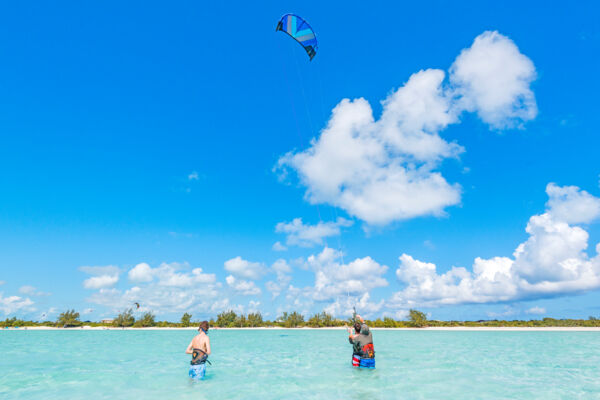
Nearly all kiteboarding instructors and kite schools are based on Providenciales (with the exception of Adventures by Salterra on South Caicos). The Providenciales schools can often arrange kiteboarding tours on other islands at extra cost, yet it’s easiest for beginners to learn here.
Kiteboarding is a mid- to higher-level difficulty sport to learn in relation to other water sports. The learning curve isn't as steep as it is for conventional surfing, yet it does take more commitment than paddleboarding and kayaking.
Beginner kiteboarding lessons in Turks and Caicos usually start off with a fair amount of time spent on shore, where you learn about safety, setup of your gear, conditions, and launching and landing techniques. Once you're in the water, the focus is on practicing water starts (how to get up and start kiteboarding) and beginner kite control. Subsequent lessons practice these skills and spend more time in the water.
Learning Time
It varies greatly by student, but it typically takes between 5 and 8 hours of lessons before students can begin to practice by themselves, after which it usually takes another 8–10 hours before the student is able to kite upwind (and back to the launch point). New designs and kite technologies have made the sport much easier to learn, and lessons and teaching methods have also improved greatly over the years.
Kiteboarding Schools
Most kite schools teach at Long Bay Beach, which is one of the best kiteboarding locations in the world and an incredible place to practice. On South Caicos, beginner lessons mainly take place at Salterra Beach.
The main kiteboarding schools offer complete lesson packages designed to advance you to the skill level of being able to kite on your own (between 9 and 10 hours). If you’ve made the decision to start kitesurfing, this is the recommended route to go.
Turks and Caicos kiteboarding lessons cost around $350 for two hours of instruction, or $1,000–1,800 for a 9-hour beginner package (2026 price). Some companies have deals that include accommodation.
Lessons often include jet ski support during instruction to ensure rider safety.
Most of the kite schools can rent all necessary equipment to intermediate or advanced kiters but usually require proof of competency before doing so. Some ask that you provide them with an IKO card (level 3K) or complete a skills demonstration. A full set of equipment with a kite, harness, and board rents for around $200 per day and approximately $800 per week.
Wingfoiling
Some schools have branched out to also offer wingfoiling (also known as wing surfing). This sport involves riding a board with a hydrofoil while using a handheld inflatable wing (sail) to surf. Lessons are offered on both South Caicos and Providenciales and start at around $350 for two hours of instruction. Gear rentals with no instruction start at around $120 per hour.
How Do The Islands Compare for Kiting?
Providenciales is the center of kiteboarding in Turks and Caicos. Along with lessons and equipment sales and repairs, virtually all kite tours and downwinder safaris operate from this island.
That being said, there are amazing kiteboarding locations and areas to discover on almost all of the archipelago's islands. The easiest way to kiteboard anywhere other than Providenciales or South Caicos is by booking a custom tour through one of the local kiteboarding companies. Otherwise, you'll need to organize your own transportation (in most cases, a short flight or ferry ride).
One exception is the waters off the Caicos Cays, several small islands within kiting distance of Providenciales.
Providenciales, North Caicos, and Middle Caicos
In terms of actual kite locations, these three islands all offer a wonderful selection of great settings. You can typically find a rideable spot no matter the wind direction.
The southern sides of these islands are on the Caicos Banks, an extensive and shallow bank that features some of the world's most turquoise ocean water. Wildlife teems here, and it's possible to see stingrays, turtles, barracudas, and small sharks gliding by. Verdant red mangroves line many of the southern coasts adjacent to the Caicos Banks, and are likewise scenic and fun to explore.
On the north coasts of these central Caicos Islands are spectacular sites with differing atmospheres. There’s Half Moon Bay Beach and a nearby shallow lagoon, the beaches at Fort George Cay, Pine Cay, and Water Cay, the rugged and majestic Mudjin Harbour, and the remote and spectacular Cedar Point and Wild Cow Run. Experienced kiters have endless sites to explore.
South Caicos
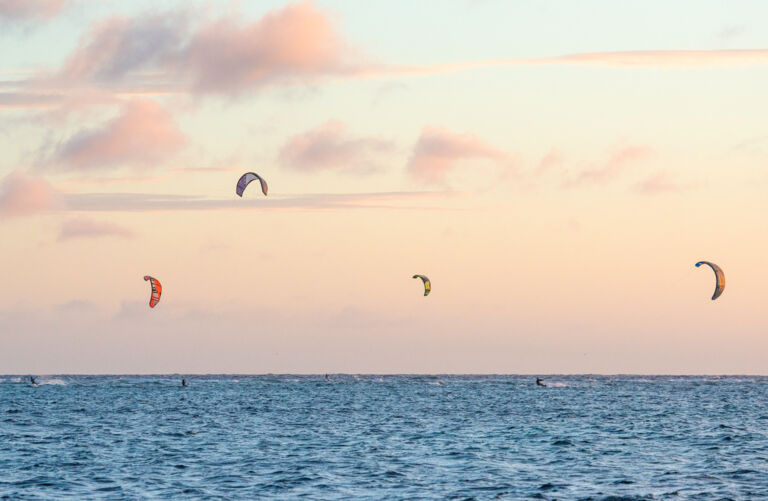
South Caicos isn’t particularly far from the central Caicos Islands and Providenciales, but the uninhabited East Caicos and extensive shallows isolate it a bit. Consequently, you typically have to stay overnight if you want to kite the pristine flats here. See South Caicos Hotels and Resorts.
You can venture off the beaten track as much or as little as you’d like on South Caicos. Beautiful Salterra Beach is a stellar location that’s easy to get to, Bell Sound offers flat water, and the channels and cays to the north of the island at Plandon Cay Cut, McCartney Cay, and Middle Creek Cay form one of the most scenic regions in the country.
Long Cay and the amazing waters of the Admiral Cockburn Land and Sea National Park are also a great spot that's close to the main settlement of Cockburn Harbour.
Grand Turk and Salt Cay
While Grand Turk and Salt Cay unfortunately don’t have the spectacular kite spots of the Caicos Islands, both have decent locations.
Both islands are small, have limited sheltered coves and wetlands, and tend to have fairly rough east and southeast coasts when the wind is up. The west coast beaches on Grand Turk and Salt Cay are nice and have relatively tame water, but the wind is almost always offshore.
A positive of these two islands is that wind tends to be consistent, a bit more constant than the Caicos Islands, and better follows predictions.
Traveling With Kite Gear
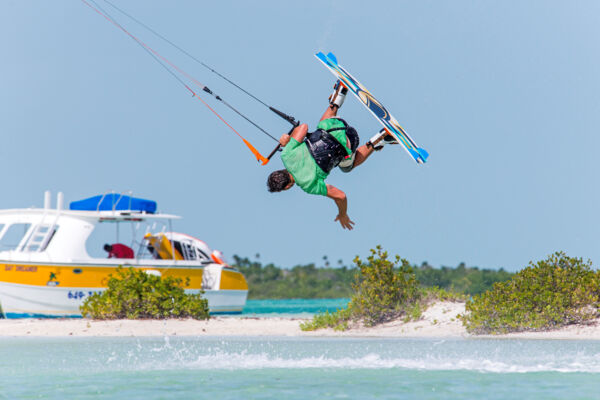
A common concern for international kiters is the cost, difficulty, and risk of equipment damage when traveling. International airlines all have varying policies (and enforcement may be random), but expect to pay additional fees.
Many airlines allow golf club bags to fall under the typical bag rate regardless of whether they exceed maximum length dimensions. This has led to comical and giant kitesurfing luggage that’s styled to look like a golf bag, complete with an impossible to miss “Golf Bag” label. In any case, kiteboarders have it better than longboard surfers when it comes to traveling.
Waves and swells in Turks and Caicos are unpredictable and a little too uncommon, and the best kite locations tend to be shallow, so it's best to leave fragile surfboards and foils at home.
Domestic Flights and Ferries
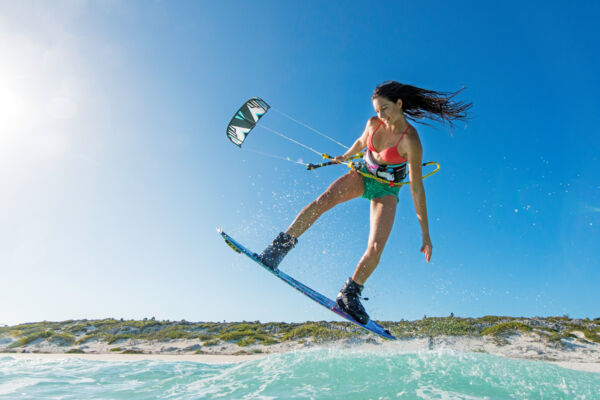
Travel between the islands typically takes place on small passenger ferryboats and small twin-turboprop aircraft that seat between 10 and 20 passengers.
Generally, there are no restrictions or lack of luggage space on the ferries. There may technically be excess baggage fees above certain amounts, yet these fees are seldom enforced.
The local airlines generally try to be accommodating, yet there’s only so much space on a tiny airplane. There’s a decent chance that excess and oversize baggage fees will be applied, and if the flight is at full capacity, items may be delayed to another flight.
Downwind Kite Safaris
A great activity for a capable kiter is a downwind kite safari through the spectacular and uninhabited cays.
These adventures begin by loading a boat with all of the kite gear and refreshments and traveling to a great launch point, often on an uninhabited island. Kitesurfers set up and take off, the pumps and bags are reloaded, and the support boat follows the group downwind.
A kite safari is simply a lot of fun. You’ll be able to race through the islands if you’d like, or you can take time exploring the coves and channels. Wildlife abounds, which simply adds to the experience.
Both private charters and shared excursions are available.
Bookings and Reservations
Given that this sport is dependent on wind, Turks and Caicos kiteboarding schools are typically accommodating if conditions aren't cooperating. In the event of very low or no wind, most instructors will reschedule you for the next available lesson (or refund your reservation in full if this isn't possible).
Different kite schools have different cancellation policies. During the peak kiting months of December, January, March, and April, some kiting schools enforce a zero-cancellation policy. At other times, they may require a minimum of two days' notice or as much as 30 days' notice for free cancellation, with penalties and fees applied for shorter notice.
If you plan to visit during the peak kiteboarding months, reserve your kiteboarding lesson well in advance to ensure availability.
Kiteboarding Schools and Rentals