Providenciales Turks and Caicos Bonefishing
Turks and Caicos is an excellent bonefishing and saltwater fly fishing destination. This is largely due to the healthy bonefish population, the uncrowded and quiet nature of many flats and fishing locations, the crystal-clear water, and the extensive and complex intertidal marine creeks found on the southern coasts of North Caicos, Middle Caicos, and East Caicos.
The bonefishing sport scene in the country is very small-scale, so it's common to have world-class flats all to yourself. Catch-and-release is the typical practice.
There is no strict season for bonefish in the islands. The fish, as well as the other common fly fishing catches, are present year-round.
The Fish
| Bonefish | |
| Common name | Atlantic Bonefish |
| Binomial name | Albula vulpes |
| Global conservation status | Near Threatened |
| Conservation status in TCI | Stable |
| Distribution in TCI | Common |
| Maximum size | 31 inches (77 cm) in length |
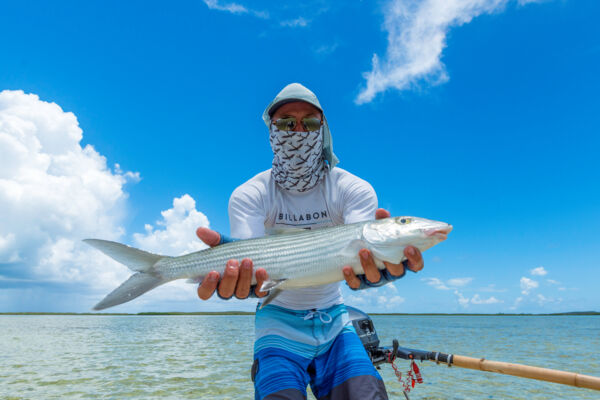
In the Turks and Caicos, bonefish tend to be in the 4–6-pound range (1.8–2.7 kg), with the larger end of the spectrum being around 10–11 pounds (4.5–5 kg). It is of course possible to find larger fish, yet such an expectation should be very tempered.
One of the great aspects of bonefishing in the Turks and Caicos is the clarity of the water. Many of the creeks and flats, especially further up the intertidal creeks, have clear water that allows for fish to be seen from a distance, even considering their silver-white color that blends into the bottom of most areas. Anglers can see how fish react to lures and casting practices, so technique can be developed and adjusted.
Tide can make a difference in fly fishing for bonefish, with halfway through an incoming tide often being the best time. The fish at this period in the tide cycle are usually entering the shallows and creeks actively seeking their prey, and are more likely to respond aggressively to lures.
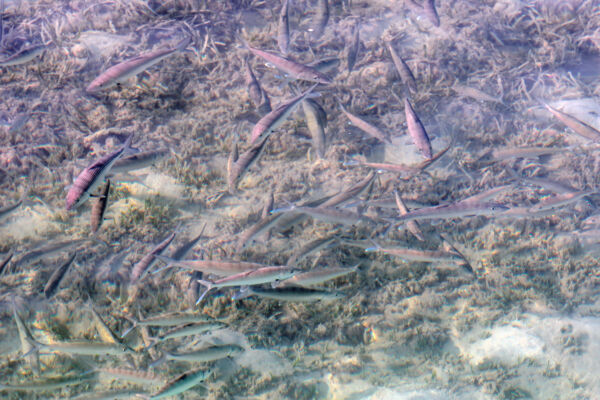
Bonefish will typically be encountered in the wild either resting in shallows, transiting in schools, or feeding in schools.
In the upper reaches of the creeks, school size often isn’t large at 5-30 members, and these schools can often be seen from quite a distance as they leave a slight wake and silvery fins will occasionally break the surface. In such situations, the fish are easy to spook if they spot any significant movement above the water. Once spooked, they will typically not hit any lures, and quickly move off.
When feeding in a school in the more open and muddy flats, it’ll often be quite obvious due to the large area of turbid water. Often, the fish are hidden in the low visibility water, yet can definitely strike at lures. In these situations, a few casts with lightweight flies will not scare them off if splashing and noise is minimized.
The tidal range in the Turks and Caicos is quite limited at less than 3 feet (1 meter), and there are significant areas fringing the intertidal creeks on the southern sides of North Caicos, Middle Caicos, and East Caicos that are only very marginally above mean sea level. During high tides, especially during higher water events such as king tides, bonefish will venture onto these temporarily flooded areas in the pursuit of invertebrates such as small crabs. As the tide recedes and the fish leave the flats and upper creeks, their willingness to strike at lures is typically (but not always) minimal.
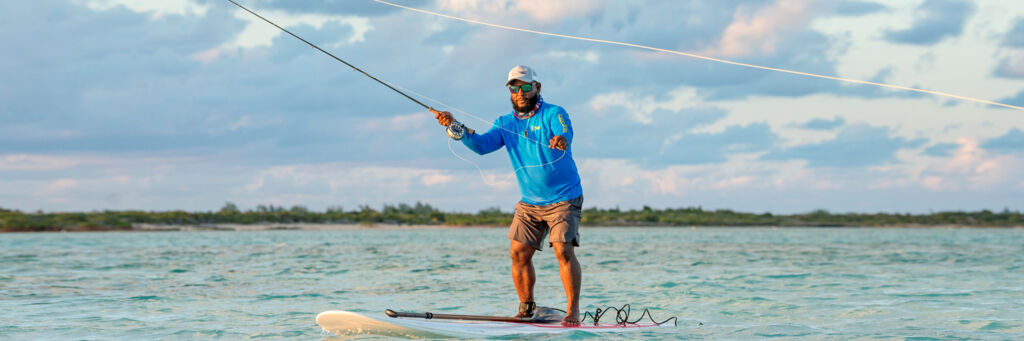
It’s common to fly fish both directly from the flats boat, or to wade in a distance to fish. When fishing from a boat, the best practice is to pick a spot, minimize noise and movement, and wait for a school to come by. Guides may pole the boat in to a good spot in order to avoid engine noise. The best practice with wading is essentially the same, or stealthy anglers can carefully make their way up the more shallow creeks until a school or its wake is spotted.
The behavior and skittishness of bonefish largely depends on where they are found, and if they are actively feeding. As may be expected, locations that are more heavily fished, such as Juba Sound and Flamingo Lake on Providenciales, tend to have very cautious fish which can be difficult to hook, especially with heavier flies or lures, and they are easy to spook. In the more remote locations, fish can be easily hooked with poor skills, spinning rods, and relatively heavy lures that make a splash.
There can be bonefish schools of significant size at some locations, such as in Bottle Creek Lagoon and in the deeper flats near Hog Cay. In the channels near Black Rock in the Caicos Banks, such as Ship Channel, Black Rock Channel, and Frigate Channel, there can be schools of breathtaking size, numbering in the many hundreds.
Other Flats Gamefish
When fly fishing in the flats and creeks of the Turks and Caicos, bonefish are not the only gamefish that can be caught or targeted. Tarpon is somewhat common, and is typically in the 5–10 lbs range, with atypical examples exceeding 60 lbs. Barracuda, typically aggressive and fun to catch, range from small fish in the shallow creeks to enormous examples in some of the deeper interchanges. Permit is also a regular catch, and is often found along the transitions of flats and channels. Snook is not common, but does show up occasionally, the sighting of which typically coincides with large regional storms.
Equipment
Rods
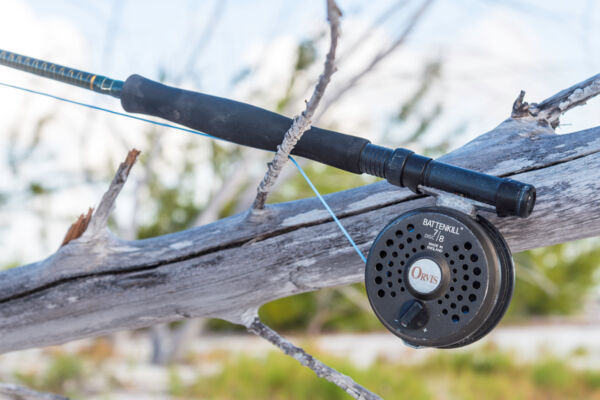
For sport bonefishing, the classic rod of choice is a fly rod with 7–9 weight, with 9' being the best overall size. A heavier 10-11 weight rod can be a good choice if targeting larger tarpon and barracuda.
One of the possible challenging aspects of fly fishing for bonefish in the Turks and Caicos is the wind. The islands typically experience a 10–20 kt (12-23 mph, 19-37 kph) breeze out of the east or southeast, and even higher isn’t unusual. Casting in any direction other than upwind with lightweight lures can be difficult.
Guides will typically provide rods and flies or lures for their guests to use, but do welcome guests to bring their own if desired.
Spinning rods can also be used to catch bonefish, especially in the less pressured areas where the fish are less skittish and are not as sensitive to the splash of heavy lures. Such a setup can be a great option for someone that doesn’t have developed fly rod skills, as it is much easier to learn basic casting techniques on a spinning rod versus a fly rod.
Fly rods, flies, and other equipment specific to fly fishing are generally not available for sale in the country. There likewise are limited reliable rental options for rods for anglers that want to DIY fish (do it yourself). Some guides may be willing to rent some gear, but it is not a regular practice.
Flies and Lures
The general theory is that the best flies and lures for bonefishing in the Turks and Caicos should mimic the prey of fish, which is primarily small crabs, shrimp, minnows, shellfish, and worms. Most of these creatures in the local environment are white or silver, so a fly such as the Gotcha or Crazy Charlie are good choices. A bit of pale pink or coral coloration also seems to be effective.
A leader of about 10’ is typically best, and fluorocarbon is preferable to monofilament, along with about 150-200 yards of backing.
It is definitely possible to hook bonefish on a spinning rod with a simple jig head hook and a soft body plastic bait, especially in the less pressured areas.
Attire
The Caicos Banks and the creeks are incredibly beautiful, but the sun can be quite intense! It’s important to be prepared, as boats will typically not have any shade. Long sleeves, an effective hat, a buff, and gloves are advised. Be aware that effective windspeed can be high when traveling by boat upwind, so some hats can be annoying or blow off in such conditions. Waterproof wading attire such as waders are not typically used.
Good polarized sunglasses are essential. Along with protecting your eyes from the strong glare, sun, and spray, they also reduce water surface reflections, making it much easier to see into the water. Sufficient sun protection is also a must. We recommend a buff, a wide-brimmed hat, long sleeves, gloves, and reef-safe sunscreen.
Other Essentials
There can be spray, and of course there is the possibility of rain, so a dry bag or waterproof case is good to have for phones, cameras, and other sensitive items. However, boats will typically have at least some limited waterproof storage space.
Bonefishing Guides and Charters
The country has a small number of bonefishing guides, most of whom have spent decades in the creeks and flats of the islands. Many of the guides operate from the island of Providenciales, and a few are based on North Caicos and South Caicos.
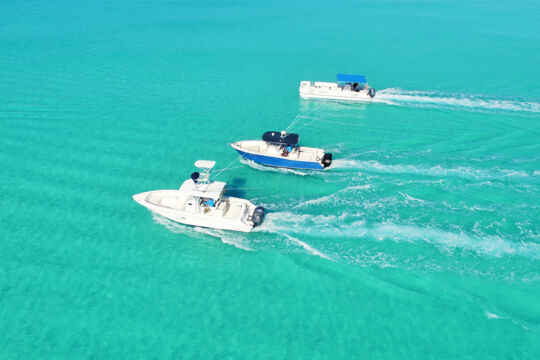
Flats boats or skiffs such as Egrets or Hewes are the typical vessels used in the islands for bonefishing. They are usually outfitted with a single outboard, and are small enough for bottom poling. A few guides based on South Caicos use airboats instead of conventional flats skiffs due to the extreme shallows of Stake Bank near Hog Cay and Southern Bush Bay to the south of East Caicos.
The typical flats boats can only accommodate 2-4 guests. All charters are private, and there are not advertised public excursions. Shared trips may be arranged between anglers.
Charter Prices
Rates for a bonefishing shore excursion on Providenciales start at approximately $700 for an afternoon for a single fisherman (2026 price). If you're booking a tour on a flats boat to the other islands, it's easy to pay over $1,500-2,000 for a full-day bonefishing trip with multiple anglers.
While wading into one of the flats and trying your hand at DIY fishing can save you money, success rates are usually far lower than on a tour with an experienced guide. Bonefish are skittish animals, and they can be difficult to find. For those who would like to try on their own, the islands of North Caicos and Middle Caicos offer the best opportunities.
Bonefishing Locations
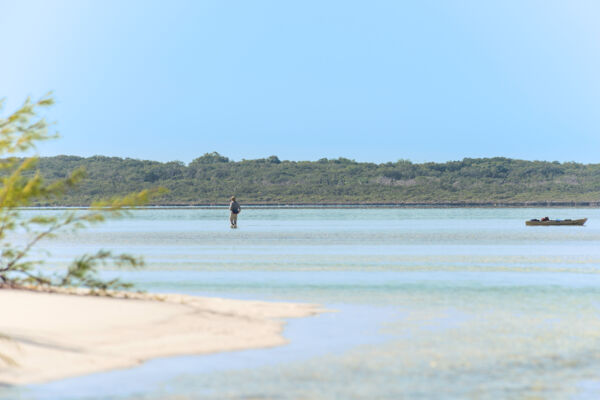
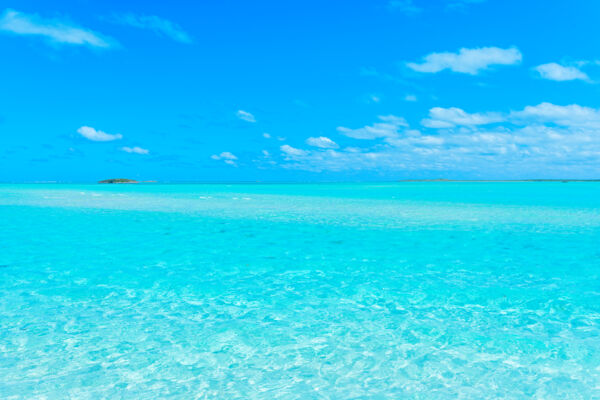
The excellent bonefishing in the Turks and Caicos (primarily the Caicos Islands archipelago) is due to the exquisite Caicos Banks and its intertidal creek wetlands systems. These banks are the shallow marine plateau that supports the Caicos Islands part of the country, and covers an area of about 1,700 square miles (4,400 km²). Much of this bank is 5-20’ deep, yet on the northern side of the bank, near the south coasts of North Caicos, Middle Caicos, and East Caicos, the depth is much less, and there are many expanses that are only a foot or two in depth. The open banks becomes a complex network of intertidal creeks near the islands, and these creeks usually are lined with red mangroves, or black mangroves in the further extents. This beautiful wilderness environment is prime bonefish habitat. The shallow seagrass beds found in some sheltered spots in the islands are also favored by bonefish.
Providenciales
Charters from Providenciales can potentially visit locations as far as East Caicos. Half-day or short charters will typically try spots near Pine Cay, Parrot Cay, and North Caicos, which are usually less than a 30-minute boat trip away. On full day trips, guides will typically attempt to access the more remote areas of North Caicos, Middle Caicos, and East Caicos.
Regarding DIY, decent spots include the marine pond of Juba Sound and Flamingo Lake near Turtle Tail and Venetian Road, Discovery Bay, and Cheshire Hall Creek. The shallow sections of several of the south coast beaches can also offer opportunities, yet the fish in such areas are beginning to disappear due to the increased number of people, activity, and disturbance that has come with the ongoing development on the islands.
North Caicos and Middle Caicos
A couple guides operate from North Caicos, and the waters around the two islands can be top tier. Bottle Creek Lagoon, a picturesque and expansive flat, can have schools of hundreds of bonefish, and the small cays in the region also have productive seagrass beds to explore. To the south of the causeway are a number of complex creeks, and on mid to higher tides, guides should be able to run their boats to the south to the open banks through the shallow channel that separates the two islands.
DIY anglers are best served by the central islands of North Caicos and Middle Caicos, which are connected by a road causeway. There are countless flats to explore, many of which are easily accessed by road. Bottle Creek is a popular location to stay at, as there are several boutique vacation rentals on the water that have kayaks and paddleboards that guests can use.
South Caicos
For serious anglers that will be using the services of a guide, South Caicos is a great option. The wetlands and flats of East Caicos, Hog Cay, and eastern Middle Caicos are perhaps the best bonefishing grounds in the country.
DIY fishing is less optimal. Flats are accessible from land, but they don’t quite compare to what can be found on North Caicos and Middle Caicos. For those wanting to fish from a kayak or paddleboard, however, the region north of Jerry Camp is exceptional for moderately capable paddlers.
Grand Turk and Salt Cay
The islands of Grand Turk and Salt Cay, which are part of the Turks Islands archipelago, unfortunately do not have the extent of wetlands and flats that the Caicos Islands do. No charters or guides operate from the two islands. There are, however, some spots that may have bonefish. On Grand Turk, the shallow seagrass off the beach between Materson Point and South Creek may have bonefish, tarpon, and barracuda. On Salt Cay, South Creek likewise (both islands have a South Creek) is the primary viable location.
Licenses and Regulations
All visitors 16 years or older, and most residents, need a valid fishing license to legally fish in the Turks and Caicos. Daily and monthly licenses can be purchased at many of the marinas on the island of Providenciales. Annual licenses are only available for residents and usually must be purchased directly at the Department of Fisheries & Marine Resources Management, which is located on South Dock Road. Fishing license availability is limited on the islands other than Providenciales. In the case of charters, it’s common for guides to arrange fishing licenses for guests.
It’s illegal to fish in protected areas in the Turks and Caicos, with the only exceptions being certain situations regarding invasive lionfish, and permitted scientific work. Protected areas include national parks, nature reserves, and nature sanctuaries.
Much of the southern coasts of North Caicos, Middle Caicos, and East Caicos is part of the Ramsar Nature Reserve, and other protected wetlands include the East Bay Islands National Park near Bottle Creek, the Dick Hill Creek Nature Reserve near Bellefield Landing, and Bell Sound Nature Reserve near South Caicos. Technically, fishing is prohibited in these areas, including catch-and-release fishing. However, local bonefishing guides regularly fish in these locations. There have been proposals to change the law to legalize catch-and-release fishing in some protected areas, yet this has not happened as of September 2026.
If you fish on your own or from shore, it's your responsibility to be aware of and follow any applicable regulations. Selective enforcement of the law definitely takes place in the Turks and Caicos, and enforcement often depends on the persons involved as well as the location.
It’s frowned upon in the fly fishing community to harvest bonefish. Traditionally, the fish have been a food source in the Turks and Caicos, and until recently the common practice was to indiscriminately net schools in the intertidal creeks with gill nets. The law stipulates that the fish must be a minimum of 20” in length to be harvested. Bonefish offers a white flaky meat, which is quite good, yet has large numbers of small bones, as its name suggests. A local saying is that if it weren’t for all of the bones, there’d be no more bonefish left!
DIY Fishing from Vessels
The law requires that any vessels that are used for fishing or are carrying fishing gear must be registered. This technically includes kayaks and paddleboards, yet enforcement varies, especially around the islands other than Providenciales. It’s common for kayaks and paddleboards rented by bonefishing guides for fishing to not be registered. It is unfortunately not feasible for visitors on a short-term stay to register a vessel.
The Turks and Caicos Fly Fishing Association
The Turks and Caicos Fly Fishing Association, launched in 2024, seeks to provide a mechanism for certifying guides, be an advocate for the industry, and assist with conservation. Most of the bonefishing and fly fishing guides in the country are involved in the organization.