South Caicos Whale Watching

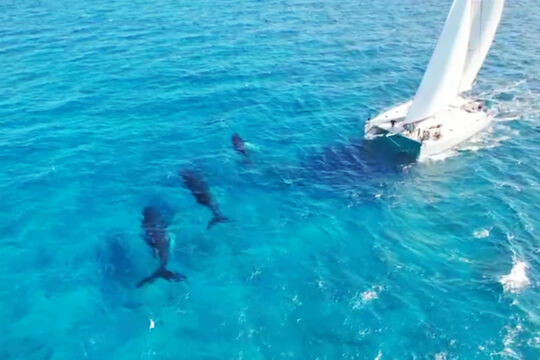
While Salt Cay and Grand Turk are better known for whale watching, South Caicos is another place where you can observe migrating humpback whales with their calves during the winter months.
Humpback whales can be spotted in the deep waters of the Turks Island Passage between Grand Turk and South Caicos each year between late December and early April. The whales travel thousands of miles from their feeding grounds in the North Atlantic Ocean (from as far as Norway, Iceland, and the eastern coast of Canada) to the Turks and Caicos Islands where they breed and calve. While the exact timing varies annually, the peak whale-watching season is usually from late January to mid-March.
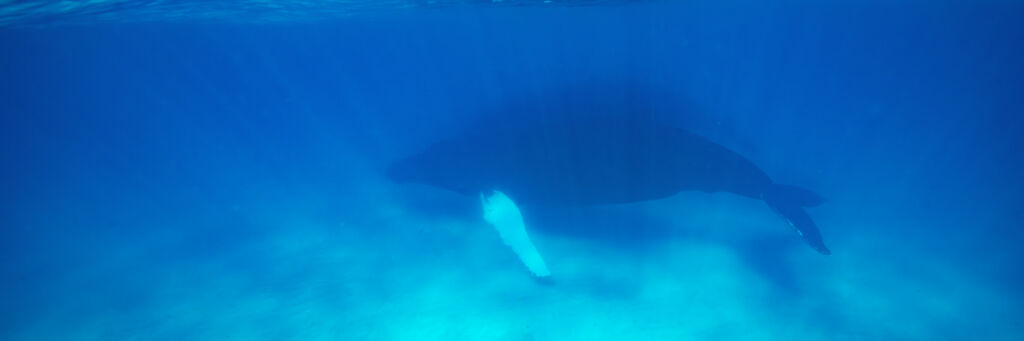
Whale watching tours in the Turks and Caicos Islands tend to be more intimate and private than what you would experience in many popular whale-watching destinations. Boats take fewer passengers, and there are never more than a few boats observing the whales at any given time. The clarity of the water—on many days you can easily see as far as 60 feet (18 m) below—makes it easy to see these ocean giants (oftentimes mothers swimming with a newborn calf).
Whale Watching Tours
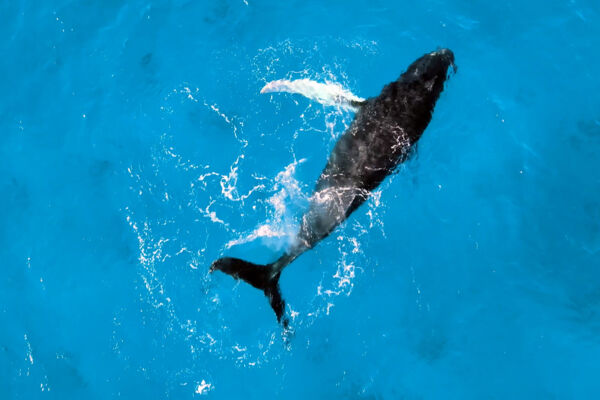
Whale watching on South Caicos is currently only offered through private charters. Public tours can be booked on the nearby island of Grand Turk with several operators (see Grand Turk Whale Watching).
Adventures by Salterra, the water sports center for the luxury Salterra Resort & Spa on South Caicos, offers a Humpback Migration Expedition each migratory season where you can search for humpback whales and their calves in the waters off the island. Some Providenciales yacht charter companies, such as Sun Charters and Big Blue Collective, offer private expeditions to the waters around South Caicos and the Ambergris Cays as well.
South Caicos is separated from Grand Turk by the Turks Island Passage, a 20-mile-wide (32 km) channel whose deepest point is over 8,000 feet (2,438 m). This body of water tends to funnel whales past South Caicos and Grand Turk and towards Salt Cay. Many of the best encounters happen on top of the shallow banks surrounding the islands in this general region. Approximately 20 miles (12 km) south are Ambergris Cay and Little Ambergris Cay, two islands whose surrounding water clarity can offer incredible whale encounters.
Humpback whales are widely regarded as the most playful of whales. Watching them in their natural habitat, you may see them tail slap, breach, and wave their pectoral fins. When captains and vessels deem it safe and appropriate to do so, guests sometimes have the opportunity to quietly slip into the water and snorkel at a safe distance from the whales.
Responsible Whale Watching Tips
Humpback whales that migrate through the Turks and Caicos are first and foremost wild animals. The DECR has guidelines for interacting with marine mammals, such as dolphins and whales, in the islands. For the whales’ safety and for yours, practice the following recommended behaviors when whale watching.
One of the benefits of whale watching in the Turks and Caicos is being able to get in the water with these majestic creatures. When snorkeling near a humpback whale:
- Wear snorkeling vests in the water.
- Avoid splashing your arms or legs excessively.
- Do not approach the whale—instead, let it approach you if it chooses to.
- Do not freedive into the whale's space.
- Do not try to touch the whale, under any circumstances.
- Keep your distance from pregnant females to avoid being seen as a threat.
- If a marine mammal charges towards you, get out of the water immediately.
Whether you are in the water with a humpback whale or observing it from the deck of a tour boat, know that you should never litter in their environment or try to feed them. Feeding marine mammals is not only dangerous—it’s illegal under Turks and Caicos law.