Turks and Caicos Stargazing
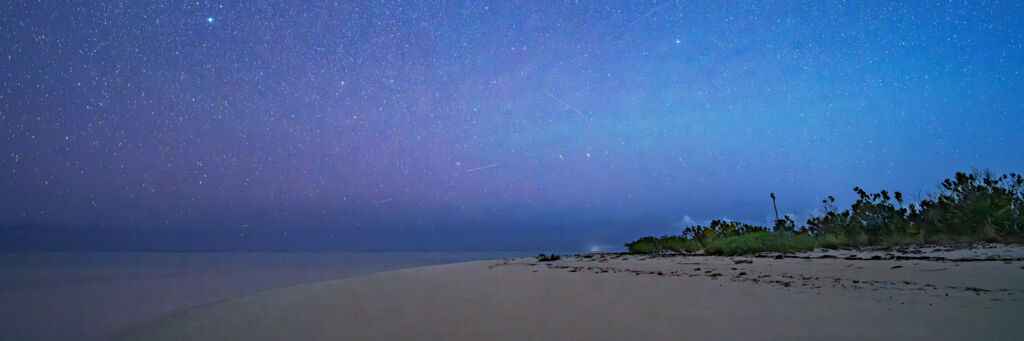
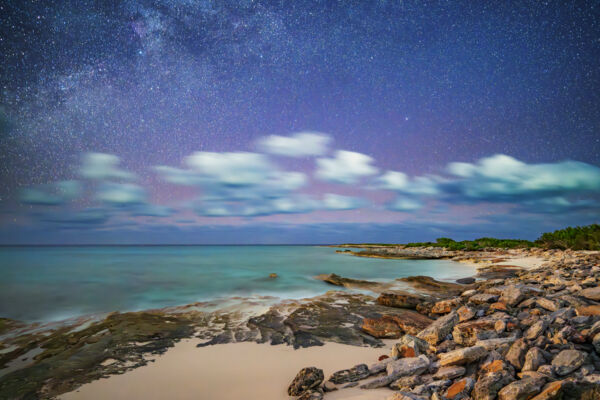
Turks and Caicos is home to incredibly clear skies that twinkle with mesmerizing stars, constellations, planets, and galaxies. Beautiful stars can be seen across the archipelago, though the darkness of the sky does vary between islands.
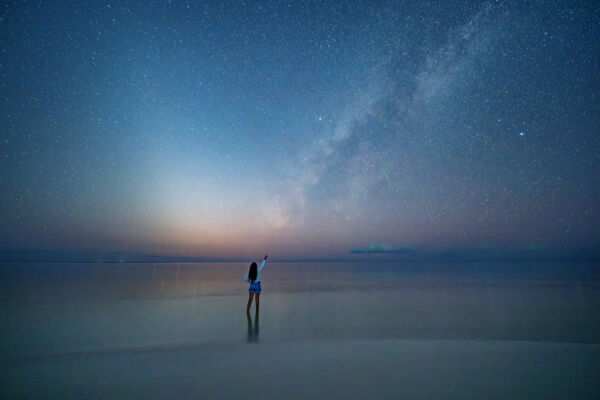
Numerous planets, including Mars, Mercury, Jupiter, and Saturn, can be seen here and are largely visible to the naked eye. So is the Milky Way, which appears with varying brightness above the archipelago and can make for incredible photographs. Among the constellations you can spot here are Orion, Canis Major, Canis Minor, Aquarius, Gemini, and Taurus.
The best time to go stargazing is during New Moon. During this lunar phase, the moon is barely visible to the naked eye, and the lack of moonlight makes celestial bodies like stars, planets, and galaxies easier to see.
Best Islands for Stargazing
Turks and Caicos is located in the Northern Hemisphere and slightly south of the Tropic of Cancer.
Some of its islands certainly offer darker skies than others, though good stargazing can be found on any island if you know where to look. Turks and Caicos has low population density, and the vast majority of development is concentrated on the central and eastern coasts of Providenciales. As such, the country experiences fairly little light pollution.
Uninhabited East Caicos, Little Ambergris Cay, and Big Sand Cay are some of the best islands for stargazing, as they are the few islands that experience virtually no light pollution from the populated centers of Providenciales, Grand Turk, and South Caicos. Unfortunately, all three are difficult to access and aren't practical for the average tourist to visit.
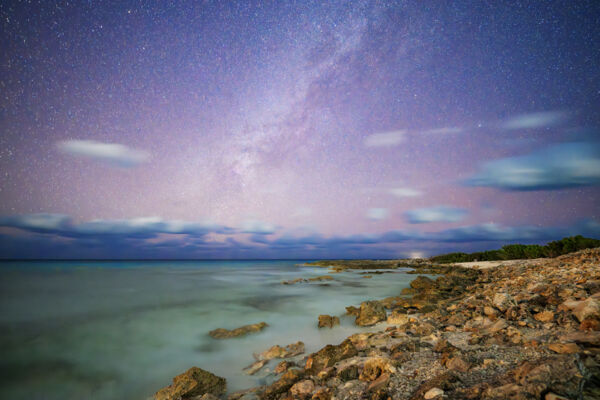
The best easily accessible stargazing islands are North Caicos and Middle Caicos. These are the largest islands in the archipelago, yet have the fewest people as well as no big hotels, city centers, or brightly lit ports.
Middle Caicos experiences less light pollution than North Caicos, and offers the better stargazing of the two. The sky in some parts of this island is exceptionally dark (almost meeting the threshold for a dark sky preserve).
Planning a stargazing adventure to these islands is fairly simple—ferries run daily between Providenciales and North Caicos, where there are several hotels and rental car companies. A causeway links North and Middle by road.
If you're staying on Providenciales, the remote west coast is the best area to see stars. However, even in the most well-lit areas of the island, it’s still common to see a pretty canvas of planets and constellations that surpasses what's typical in large North American cities.
Light Pollution
Light pollution is often quantified by classes on the Bortle scale, which assigns a value between 1 and 9 to different areas of the night sky. Class 1 describes some of the darkest skies on the planet, while Class 9 describes areas with inner-city conditions where only the moon and a few planets are visible.
Light pollution on Providenciales ranges from Class 3 to Class 5, with the worst light pollution found in central and eastern Providenciales (for example, Grace Bay, Turtle Cove, and Leeward). Comparatively, light pollution on islands like Middle Caicos and uninhabited East Caicos is Class 1 in some parts, and here you can see the Milky Way, glistening planets, and dozens of constellations overhead.
| Turks and Caicos Light Pollution | ||
| Island or Area | Bortle Scale Rating | Sky Quality |
| Providenciales (Central) | Class 5 | Suburban |
| Providenciales (Eastern) | Class 5 | Suburban |
| Providenciales (Western) | Class 3–Class 4 | Rural Sky to Rural/Suburban Transition |
| North Caicos | Class 2–Class 3 | Rural Sky/Average Dark Sky |
| Middle Caicos | Class 1–Class 2 | Average to Excellent Dark Sky |
| East Caicos | Class 1–Class 2 | Average to Excellent Dark Sky |
| South Caicos | Class 2–Class 4 | Average Dark Sky to Rural/Suburban Transition |
| Grand Turk | Class 4 | Rural/Suburban Transition |
| Salt Cay | Class 2 | Average Dark Sky |
| Parrot Cay | Class 3 | Rural Sky |
| Pine Cay | Class 3 | Rural Sky |
| Ambergris Cay | Class 2 | Average Dark Sky |
Stargazing Tours
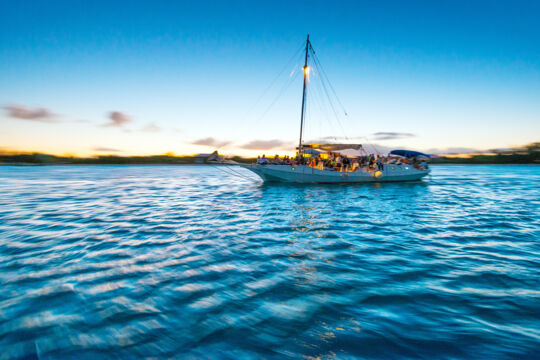
There are no regular land-based stargazing tours or astrophotography excursions in the Turks and Caicos. Most stargazing is done independently or on a private boat charter or public evening cruise from Providenciales.
Several companies offer combination stargazing and glowworm cruises. They combine time spent looking up at the night sky and observing the magical phenomenon of marine glowworms (Bermuda fireworms) that light up the water with a bright green glow as they mate. Trips typically visit the channels near Mangrove Cay and Donna Cay.
DIY Stargazing
A simple pair of binoculars is a cost-effective and easy way to improve your star sightings. They also give you a wider view of the sky compared to a telescope.
While there are many beautiful remote places to watch the stars, be wary that venturing to remote areas at night increases your chances of being a victim of crime.
Dark Sky Preserves
There are no dark sky preserves in the Turks and Caicos Islands. There are also no astronomical observatories.
As the Turks and Caicos becomes more developed, light pollution is unfortunately increasing. This can be an annoyance for astrophotographers or those who simply want to experience a dark sky.
Unusual Sightings
SpaceX Explosion
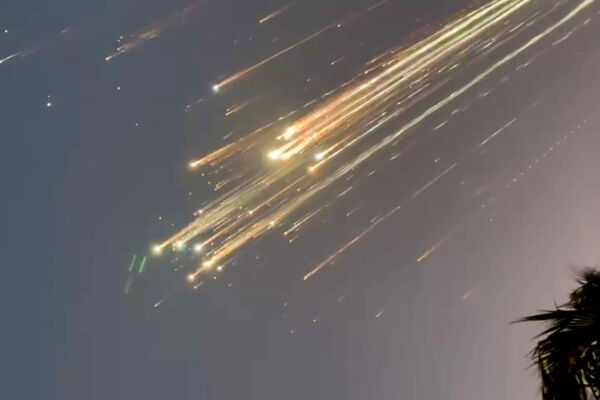
On January 16, 2025, a SpaceX Starship rocket exploded in Turks and Caicos airspace, producing a brilliant shower of flaming debris and colorful streaks of smoke across the sky. The explosion—referred to as a “rapid unscheduled disassembly” by Elon Musk’s SpaceX—unfortunately created significant pollution on the country’s coastlines and the open ocean, where for months residents continued to find charred debris from the rocket.
A second Starship rocket exploded on March 6, 2025, west of the Turks and Caicos Islands and was visible from Providenciales. No serious injuries or fatalities were reported with either incident.
Rocket Launches
On clear days, it’s sometimes possible to see satellites being jettisoned from Florida and Texas if you’re gazing northwest. They’re particularly impressive after sunset around dusk.