
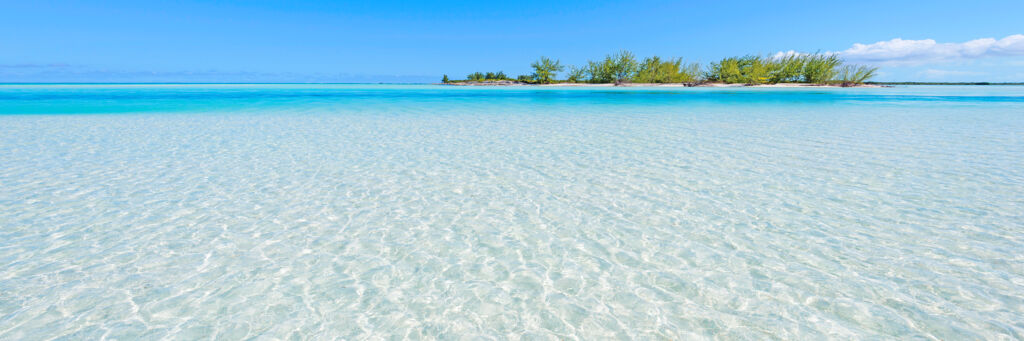
Greenwich Creek North Caicos
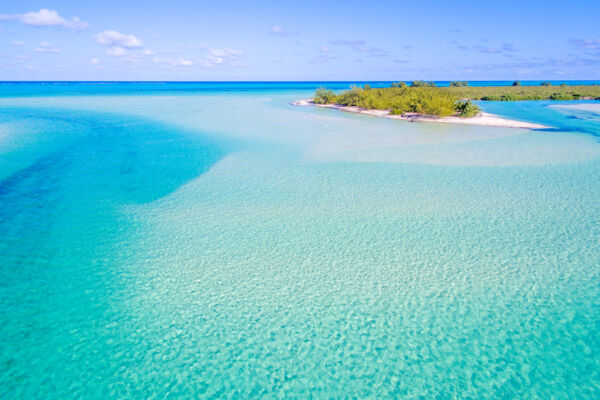
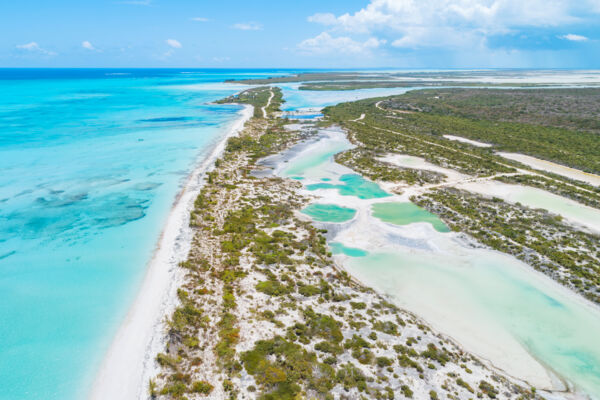
Greenwich Creek is a beach located at the eastern end of Horsestable Beach and at the primary inlet (North Mouth) into the Bottle Creek Lagoon. The area is typically highly scenic, with beautiful blues and turquoises of the channel’s water contrasting against the white sand. On the ocean side, sandy shallows and sandbars extend out a distance from the beach.
The Caicos Barrier Reef is quite a distance offshore, and Greenwich Creek is typically in the lee of Bay Cay, so the water in the area is usually quite calm.
There’s typically a range of wildlife in the area, from turtles and stingrays in the channel, to birds that include ospreys, herons, egrets, and seabirds.
Close to the south of Greenwich Creek is Major Hill Cay, a large cay that consists of red mangroves and coastal plain with scrub brush.
The area is also an exceptional kayaking and paddleboarding location, with several possible directions of travel. To the southeast is the channel between Bay Cay and Major Hill Cay, which is typically sheltered in most weather conditions, and typically offers great wildlife sightings. To the southwest is the route that leads into Bottle Creek. On the oceanside to the east is the Bay Cay coastline, which offers rugged landscape of shallow seagrass beds and beach with large accumulations of flotsam.
The Greenwich Creek area was once its own island, and was separated from the mainland of North Caicos by the small Leeward Mouth inlet, which was located about 0.8 miles (1.3 km) to the northwest of the current inlet.
Getting to Greenwich Creek
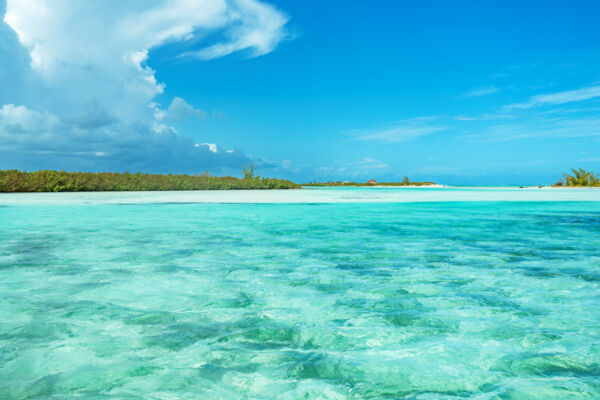
Greenwich Creek is most easily accessed via Greenwich Creek Road, which begins near the Horsestable Beach dock and community center. The 2.25-mile (3.6 km) Greenwich Creek Road is unpaved and sandy, yet most cars are able to traverse it without much difficulty. To access the beach, follow the road to its eastern conclusion.
The Greenwich Rocks
The Greenwich Rocks (also known as the Bay Cay Rocks) are a collection of small limestone cays and rocks. There’s no terrestrial vegetation to speak of on the cays, yet a number of seabirds such as terns and gulls can often be seen on the rocks.
The two largest of the rocks are emergent at all times, and several smaller rocks lie closer to the water’s surface.
The East Bay Islands National Park
Greenwich Creek beach is directly opposite Bay Cay of the East Bay Islands National Park, with the inlet separating the two. The western boundary for this national park is essentially in the middle of the inlet between Greenwich Creek and Bay Cay, so it is possible to legally fish from the Greenwich Creek side, but not from Bay Cay.
Sargassum
Although typically stunning, the Greenwich Creek area can at times experience significant accumulations of sargassum due to a combination of wind direction and tidal movement. Sargassum in the area can at times be so bad that it dyes the water an unappetizing brown. Typically, if sargassum deposits do occur, it’s during the later summer and early fall months.
The Crab Farm
One interesting fact is that in the early 1990s, Greenwich Creek was the site of a crab farm. Operated by West Indies Mariculture, this farm raised Mithrax crabs in enclosures suspended in the sheltered waters off the southern side of the Greenwich Creek peninsula.
West Indies Mariculture was experimental in nature and unfortunately only lasted a few years. Today, essentially no evidence remains onsite of the crab farm.
Beach Accesses
North Mouth is the primary beach access to the main creek inlet. Leeward Mouth leads to a bit of secluded beach.