Turks and Caicos Potcakes
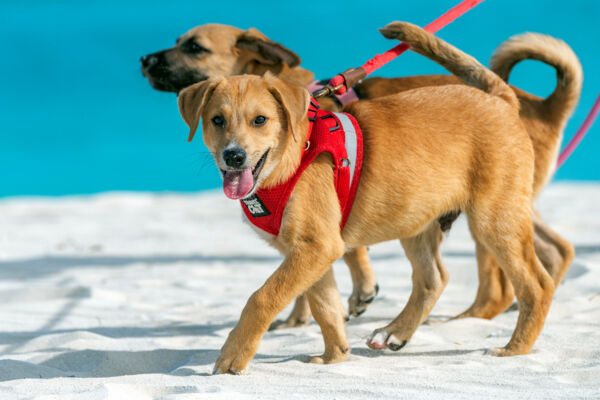
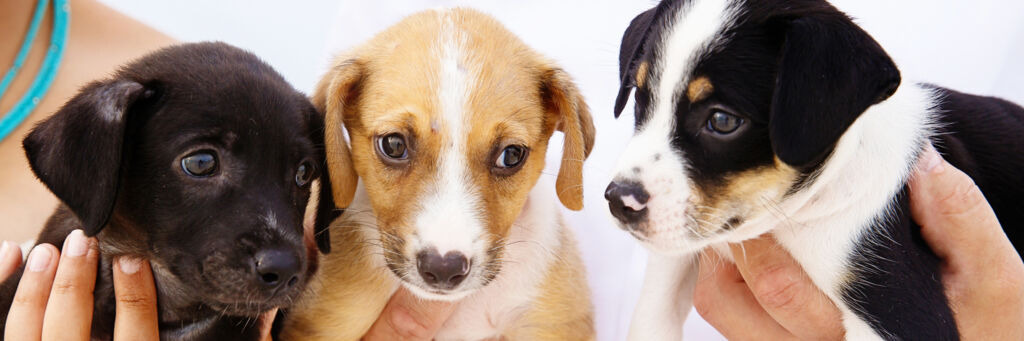
Potcake is the common name for the island dogs found in the Turks and Caicos and the Bahamas. These dogs are not endemic or native to the Turks and Caicos and the greater Bahamian archipelago, and were introduced by early settlers and sailors as pets and for pest control. They can be traced to several origin breeds, yet have a heavy terrier influence (and may even claim some ancestry from the small barkless hunting dogs that the pre-Columbian Lucayan peoples once had).
It’s common to spot packs or single feral Potcakes on many islands, including Providenciales, Grand Turk, North Caicos, Middle Caicos, and South Caicos.
Potcakes are very hardy, friendly, loyal, and respond moderately well to training. They’re considered mid-sized dogs, typically weighing 40–65 pounds (18–30 kg) as adults, with smooth short coats that may be a variety of colors, including black, brown, white, reddish, cream, yellow, and variations of the preceding hues.
Where Do Potcakes Get Their Name?
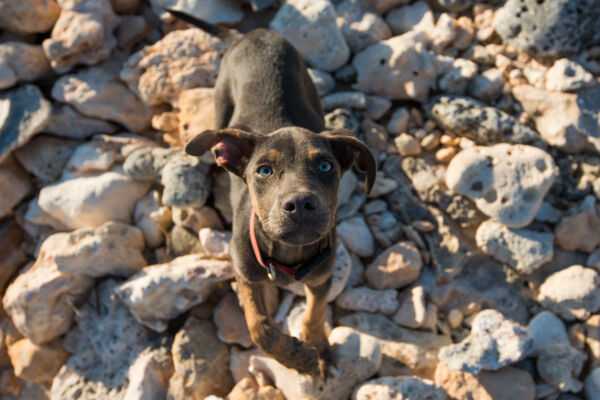
The origin of the name “Potcake” is quite simple, and ties into the meager economy that these islands and the nearby Bahamas had in the past. Before food imports were commonplace, locally sourced seafood, maize, beans, okra, and sweet potatoes formed the core of most Turks and Caicos food, and these ingredients were often transformed into stews, soups, and souses cooked in large pots. After the cooking process, there was typically a layer of burnt and congealed material left in the bottom of the pot, and this “potcake” was fed to the dogs.
Is the Potcake an Identifiable Breed?
We like to think it is! The answer to this question also depends on who you ask. As of now, the American Kennel Club hasn’t recognized the Potcake as a specific breed, yet the dogs meet all basic criteria to be recognized as their own breed.
Are Potcakes Dangerous?
| Potcake | |
| Common name | Potcake |
| Binomial name | Canis lupus |
| Conservation status | Least concern |
| Distribution in TCI | Common on main islands |
| Maximum weight | 24 to 65 pounds (11 to 30 kg) |
| Lifespan | 10 to 12 years |
Traditional Potcake dogs tend to not be aggressive—however, feral dogs can be dangerous. In many Caribbean islands, large guard-style dogs such as rottweilers and pit bulls are popular for the security and image they provide, and these larger dogs sometimes breed with feral local dogs, resulting in more aggressive offspring.
Historically, nearly all dog attacks here on people have been committed by pets owned by irresponsible owners, and local laws meant to curb dangerous pet behavior are unfortunately rarely enforced by the government.
Potcake Place
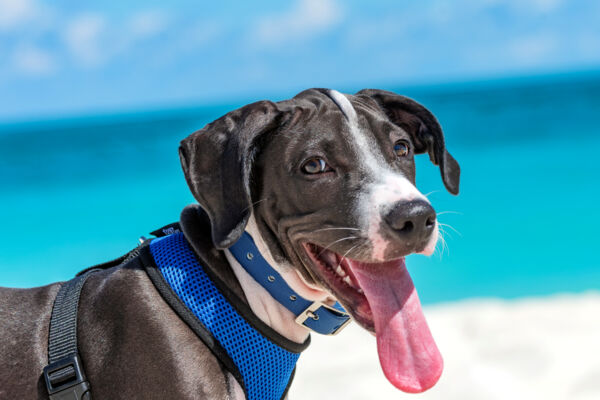
The best place to see and interact with these dogs is Potcake Place, located at the Saltmills Plaza in central Grace Bay. This nonprofit charity cares for rescue dogs, and attempts to find new homes for unwanted dogs both locally and abroad.
Part of what makes Potcake Place such a well-known attraction is that they encourage guests to take puppies out for two-hour socialization walks on nearby Grace Bay Beach. During peak times, there can be more demand than there are puppies. Puppies are available on a first-come, first-served basis, so it's best to arrive early!
Adopting a Potcake
Potcake Place has the main goal of getting stray dogs a safe home, so they are able to help with the adoption process and transport to other countries.
The minimum import age varies by country. As of August 1, 2024, the CDC mandates that dogs must be at least six months old to be brought into the United States.
See Traveling With Pets for more information.