Queen Conch
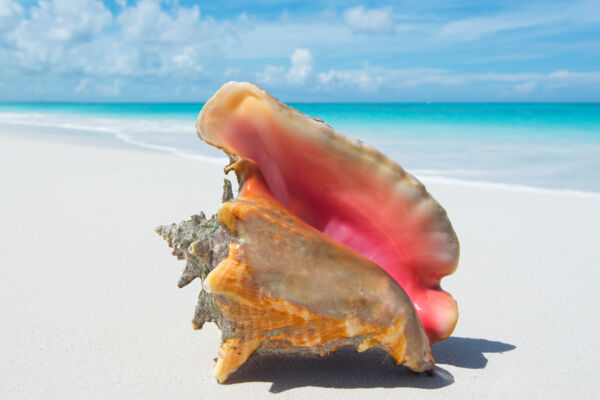
The queen conch (Aliger gigas) is a giant marine gastropod mollusk with a unique spiral shell. There are a few types of conch found in the Turks and Caicos, yet this species is the best-known, with a close connection to the cuisine, culture, and history of the islands.
Conch is pronounced ‘konk’ (with a hard K sound, and the H is silent). The IPA pronunciation is kɒŋk.
Queen conch has always been an important source of food in the Turks and Caicos. Evidence suggests that the pre-Columbian Lucayans who once inhabited the archipelago actually exported the animal's dried meat to nearby islands, including Hispaniola (modern-day Haiti and the Dominican Republic).
Today, it’s a staple of many classic local dishes, and the animal's name and shell are broadly reflected in the culture of the Turks and Caicos. Many places and businesses are named after the giant sea snail, and references to it are made in local music and art.
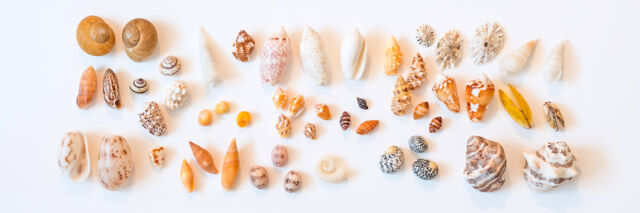
Several types of conch are found in the waters of the Turks and Caicos. In addition to Aliger gigas, the king helmet (Cassis tuberosa), horse conch (Triplofusus giganteus), milk conch (Macrostrombus costatus), and hawkwing conch (Lobatus raninus) are also found in the islands. All are often referred to as conchs, although of the four, only the hawkwing and milk conch are true conchs.
Species Overview
| The Queen Conch | |
| Common name | Queen conch |
| Binomial name | Aliger gigas |
| Global conservation status | Near threatened |
| Conservation status in TCI | Declining population |
| Distribution in TCI | Somewhat common |
| Maximum size | 14 inches (350 mm) in shell length |
The queen conch is a benthic herbivore that feeds on algae and seagrass, unlike some of the other large conch-like species (such as the horse conch) that prey on other mollusks and sea creatures.
By grazing on algae, they play an important ecological role in helping maintain the health of seagrass beds and prevent algae overgrowth.
Habitat
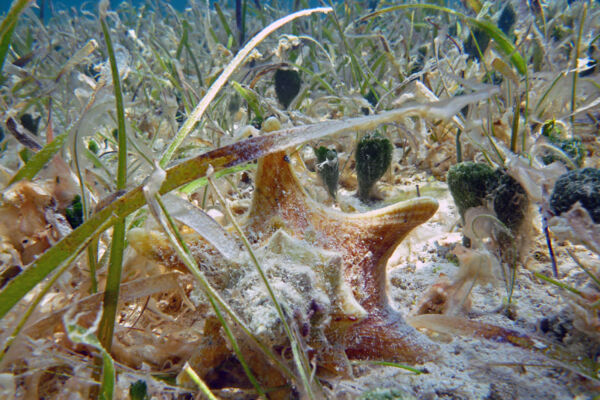
The queen conch’s favored habitat is seagrass beds and sandy ocean floor in depths ranging from 3–60 feet (1–20 m). They can be found at shallower and deeper depths, yet in the former case they are often juveniles, and in the latter case higher densities in deeper depths are typically associated with overfishing.
In the Turks and Caicos, the shallow Caicos Banks and the banks surrounding Grand Turk and Salt Cay support the majority of conch in the islands.
Appearance and Anatomy
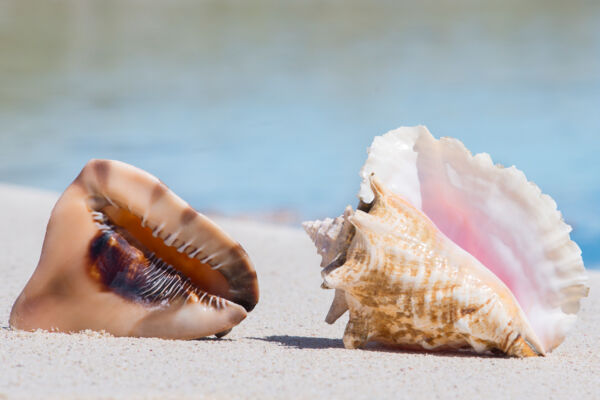
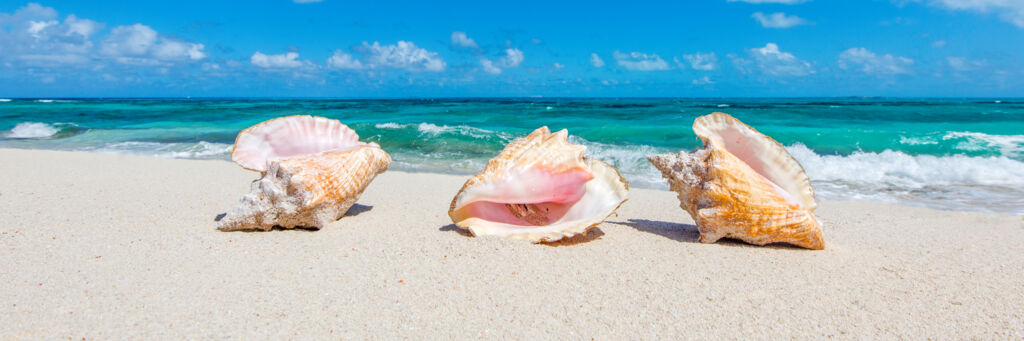
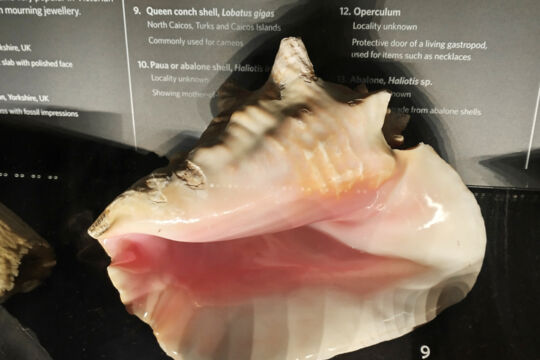
Queen conch are giant snails with a large whorl-shaped shell, which is their exoskeleton. The shell has a sandy-colored exterior that ranges from orange to brown, which transitions to a beautiful pink color on the inside of the shell and flared lip.
They are permanently attached to their shell, which they build themselves through a process called biomineralization. You can determine their age by measuring the shell and thickness of the lip.
The animal within the shell resembles a snail, with two eyes that protrude from long speckled tentacles (eyestalks), an orange mantle, and a large muscular foot for getting around. Attached to the foot is a long curved claw (operculum) that the gastropod uses to dig through the sand and 'leap' forward. This leaping motion, commonly known as the strombid leap, is a special type of movement observed in conchs.
Algae can often be seen growing on the shells of wild conchs in the Turks and Caicos.
Scientific Name
The current scientific name (binomial nomenclature) of the queen conch is Aliger gigas. The mollusk's scientific name has changed quite a few times throughout history. From 1758, the giant snail was referred to as Strombus gigas until 2008, when it was changed to Lobatus gigas.
More recently in 2020, the name was updated to Aliger gigas, due to work done by Stephen Maxwell and colleagues, and this current name is now recognized by the World Register of Marine Species.
Queen Conch Life Cycle
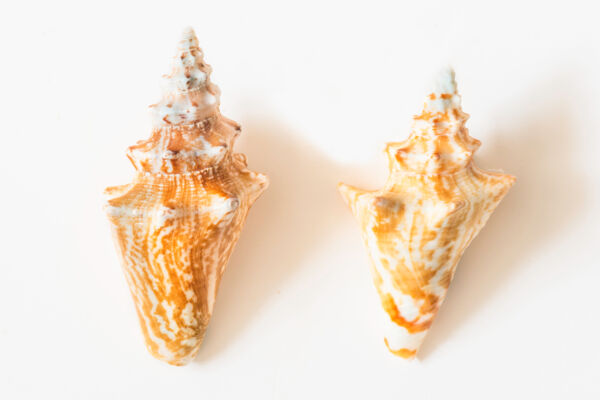
Conchs start life as an egg in an ‘egg mass’, a group of individual strands which are woven together with sand to protect the individual delicate eggs. Each egg mass has approximately 500,000 eggs, but may have as many as 2 million.
Five days after hatching, in the larval phase, conchs are about 500 μm (0.019 inches), and have yet to undergo the metamorphosis stage. This metamorphosis phase occurs around day 18, when they measure around 800 μm (0.031 inches). By day 19, after they have undergone metamorphosis and are in the post-larval stage, the animals are usually about 1 mm (0.039 inches) in size.
For the first year, while they are juveniles (6–18 cm, 2½–7 inches), it can be difficult for them to survive. They are small enough to simply be eaten whole by octopuses and similar predators. Other natural predators are lobster, stingrays, tulip shells, crabs, turtles, and porcupinefish.
These mollusks take 3–4 years to mature and become viable for human consumption. They are vegetarian scavengers, which means they scour the sea floor for food, eating mostly algae and detritus. A mature animal can reach lengths of up to 35 cm (14 inches). The mollusk can lead a relatively long life, and individuals have been known to live for around 25 years.
Conchs have separate sexes and mate approximately nine times a year between March and October. Females lay an egg mass that typically contains about 500,000 eggs. In the wild, only one egg out of 500,000 in the egg mass usually matures into an adult.
)
Extent
The queen conch is found throughout the tropical and warmer Atlantic and Caribbean, with a range extending as far north as Bermuda and the Florida Keys and as far south as Brazil.
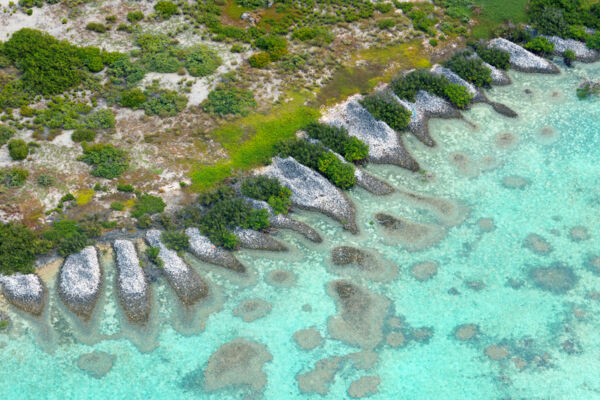
In the Lucayan Archipelago, the strongest populations of this giant mollusk are found on shallow marine plateaus, such as the Little Bahama Bank, the Great Bahama Bank, and the Caicos Banks. In the broader Caribbean, large populations are typically associated with shallow marine plateaus that are difficult to access and exploit for fishing.
Conservation Status
The queen conch is considered a near-threatened species by the IUCN. As of February 2024, the United States National Oceanic and Atmospheric Administration (NOAA) has listed queen conch as threatened under the Endangered Species Act (ESA).
Populations are considered at risk by many governments and organizations due to overfishing, with some jurisdictions prohibiting the fishing or harvesting of the snail (such as in the continental United States). The species is protected under the CITES Treaty, and as such exporting the animal (or the shell) typically requires a permit.
Populations of the marine snail in the Turks and Caicos are under threat due to extreme overfishing. Some conservation efforts have been implemented, yet the overall rate at which the fisheries harvest the mollusk is not sustainable.
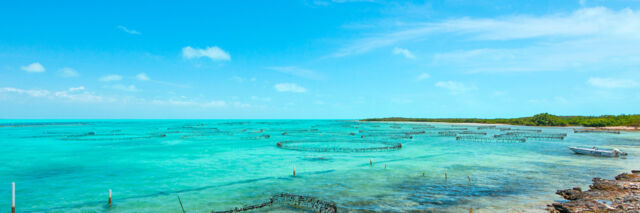
The Caicos Conch Farm, which once operated on the island of Providenciales and was the world's only such farm, produced meat for local use and export. Unfortunately, this aquaculture project failed due to the relatively long maturity time for this marine mollusk, along with the relatively low local cost of meat harvested from the wild, which caused it to never be a highly profitable venture.
Fishing Season and Regulations
In the Turks and Caicos, there is no closed season for consuming conch (though there is a closed season for exporting it). The open season for exporting conch meat is from October 16 to July 14 annually.
The minimum catch size is a shell size of 7 inches (18 cm) long. A fishing license is typically required to legally harvest the gastropod.
CITES and Legal Protections
Since 1992, the queen conch has been protected by the CITES multilateral framework, which controls exports and international trade. The CITES regulations regarding the animal have been agreed to by many of the countries where the mollusk is naturally found.
From the Turks and Caicos, excepting limited quantities of shells and meat for personal use, exporting products derived from the animal requires a CITES permit. In practice, visitors to the Turks and Caicos are allowed to take three shells back home without obtaining a CITES permit.
Queen Conch in Cuisine and Culture
Conch is an important symbol of the Turks and Caicos, being one of three symbols on the Turks and Caicos flag (the other two being a spiny lobster and a Turk's head cactus). It is also represented on the country's national costume as a band of pink.
The shells have been used for decoration and as tools as far back as the time of the first-known peoples in the islands (a Taíno-language people who arrived in the islands around 700 AD). The giant marine snail, being an easy source of protein, was a staple food.
Art and Music
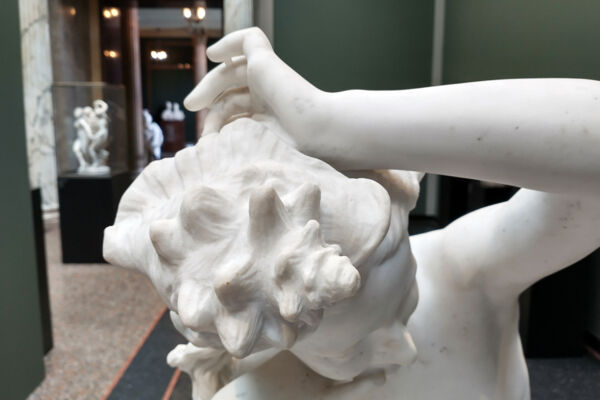
In later centuries and into the Victorian era, conch continued to be fished for food, but the shells with their pearlescent lining began to attract interest abroad for decorative and cameo purposes.
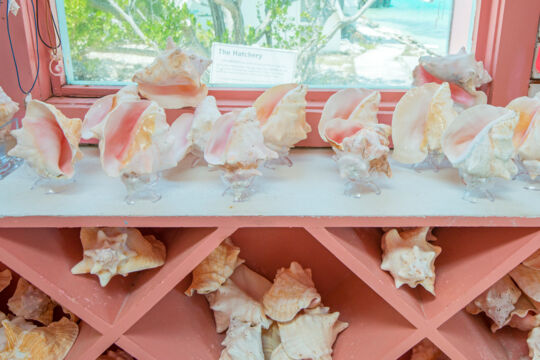
Queen conchs produce beautiful shells which are known for their vibrant pink interiors. Unfortunately, to remove the animal from the shell, fishermen routinely crack the top of the shell to break the seal the animal creates and thus be able to pull it from the shell. This ultimately damages the aesthetic value of the shell.
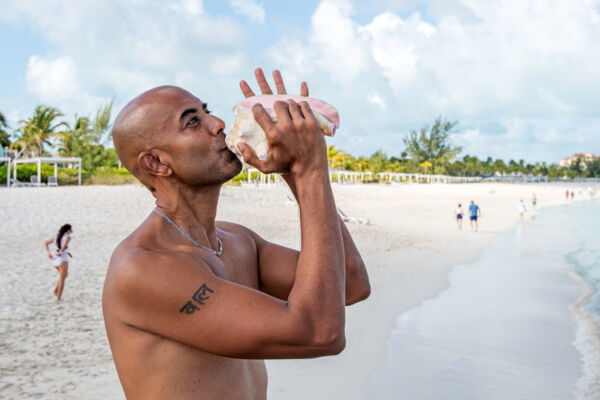
Shells can be used as horns or trumpets when cut in a certain way, and the practice of conch blowing can still be seen occasionally to this day. Conch horns can be found for sale around the islands, although it’s a bit tricky to properly blow a horn sound.
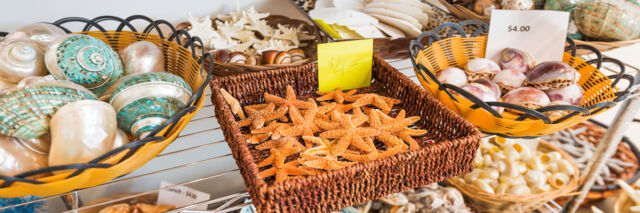
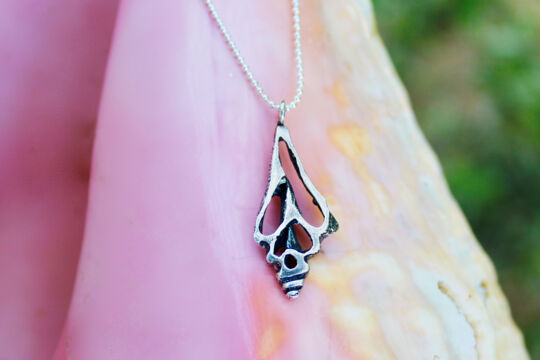
Today, shells are fashioned into bowls and spoons, keychains, paperweights, and various other crafts.
Construction
The shells also saw industrial uses in the earlier days in the islands. The Lucayans used crushed shells in their Palmetto ware ceramics, and later Loyalist settlers would grind and burn the shells to create a cement for plaster, stucco, and mortar use.
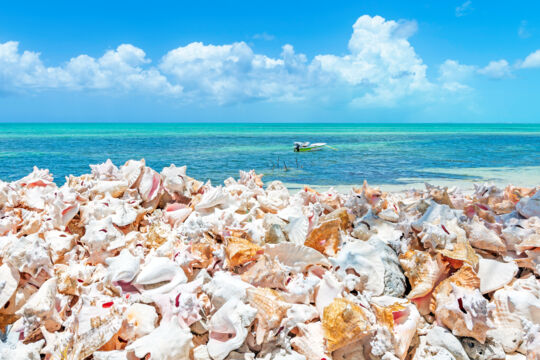
Due to the extremely hard nature of the shells, broken shells have been used to line the tops of walls to prevent people climbing over, much like what is done with broken glass.
Jewelry
Conch pearls are rare but do occur. They form in much the same way as a clam pearl, albeit with more irregular shapes. Colors range from pinks and whites to yellow, peach, and even a light orange.
Jai’s is one of the few local jewelry shops that sells conch pearl jewelry.
Culture
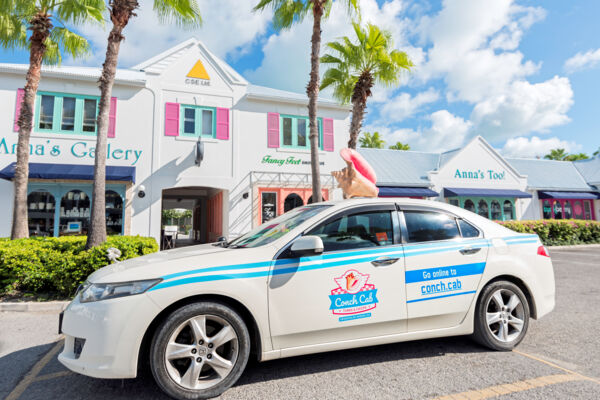
The conch is represented in many ways across the Turks and Caicos, from popular restaurants such as Da Conch Shack to businesses (Konk Apparel) and places such as Conch Cay and Conch Ground on South Caicos. Conch boat is a generic term for the small and sturdy motorboats used by local fishermen.
The Turks and Caicos Conch Festival was held annually on Providenciales for 16 years right on Blue Hills Beach and featured vendors serving many types of conch dishes. The last festival was held in 2018.
Conch as Food
Conch has a mild taste and flavor profile and a firm texture that's similar to squid, clams, or lobster. To tenderize it, the meat is usually 'beaten' before it is incorporated into many popular cooked local dishes, which reduces its toughness and chewiness. The meat shouldn't taste fishy.
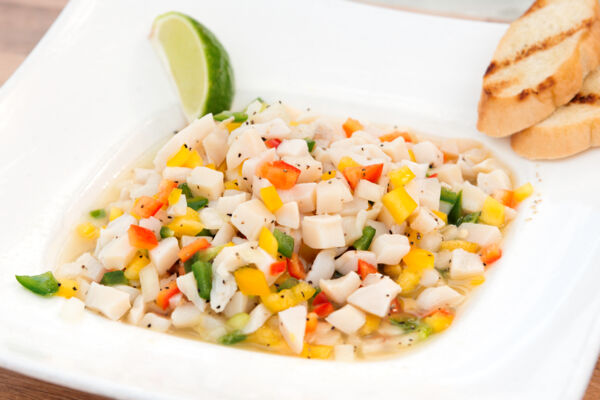
Eaten raw—usually in conch salad (a type of ceviche)—it has a mild flavor, but is a bit more rubbery than when cooked.
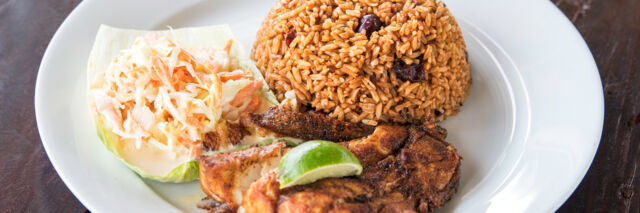
Conch is an integral part of local cuisine in the Turks and Caicos Islands, and there’s a wide range of classic dishes that incorporate the meat from the giant snail. Some notable examples include conch salad, conch fritters, cracked conch, and conch chowder.
Traditionally, fried foods such as fritters and cracked conch were not a common part of the Turks and Caicos diet, so the seafood, both fresh and dried variants, would often end up in stews and soups.
These stews and soups would often be slow-cooked for hours, and the remaining burnt compound left in the bottom of the pots led to the name of another quintessential Turks and Caicos icon, the potcake dog, a breed of dog that was fed these tough scraps and that has since stolen the hearts of many visitors to the islands.