The Unique Turk's Head Cactus
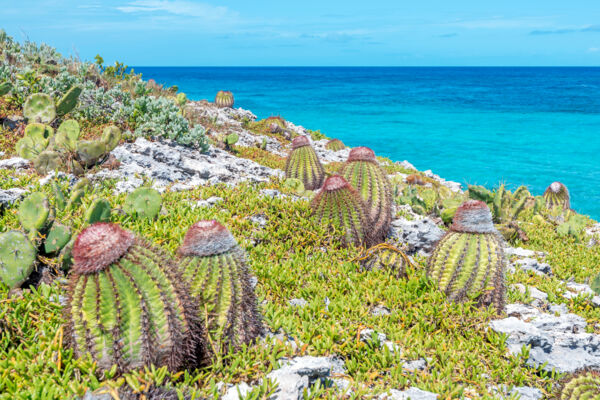
The Turks and Caicos is home to four indigenous varieties of cactus. The Turk's head cactus (also known as the Turk's cap cactus) is the rarest and most iconic.
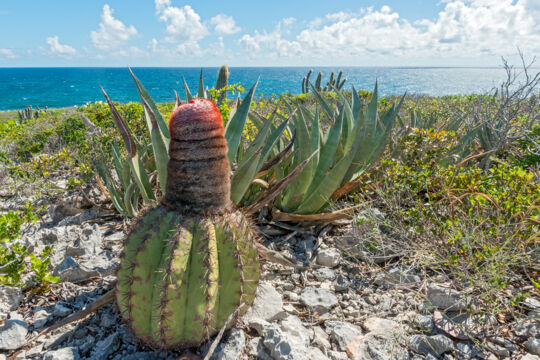
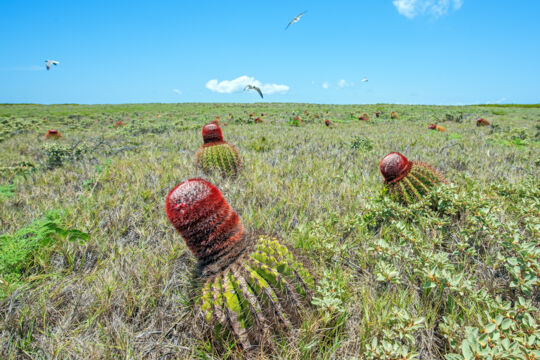
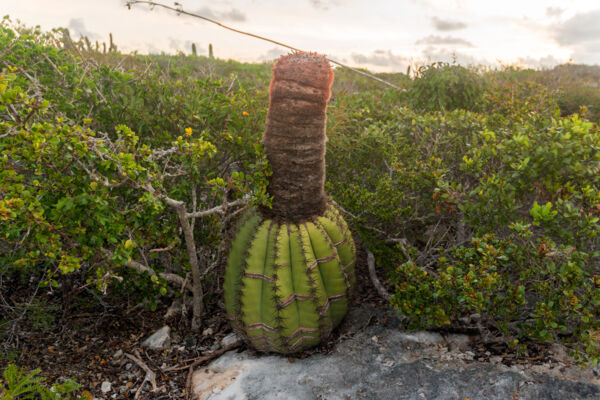
The Turk's head cactus (Melocactus intortus) is a variety of small barrel cactus with a mature height rarely exceeding 24 inches (61 cm) and a diameter of 14 inches (35 cm).
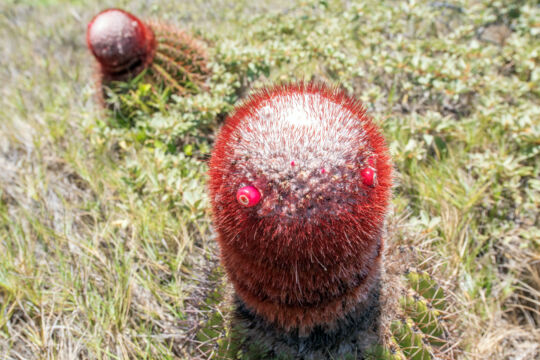
It’s easy to see where the species got its name, as the reddish cap that tops the cactus resembles a Turkish fez hat.
Outside of the Turks and Caicos Islands, Melocactus intortus is also found throughout the Antilles, including Puerto Rico, the US Virgin Islands, the Bahamas, and Antigua and Barbuda.
The Turk's head cactus appears on both the Turks and Caicos flag and coat of arms and is represented by a red band on the Turks and Caicos national costume.
The Fruit
| Turk's Head Cactus | |
| Common name | Turk's head cactus |
| Binomial name | Melocactus intortus |
| Global conservation status | Least concern |
| Conservation status in TCI | Declining population |
| Distribution in TCI | Uncommon |
| Mature height | 12–24 inches (30 to 61 cm) |
Throughout the year, mature cacti will produce small flowers and fruit on their cap.
Although tiny, the fruits are tasty, and are pursued by iguanas, lizards, and birds (and sometimes humans).
Habitat and Environment
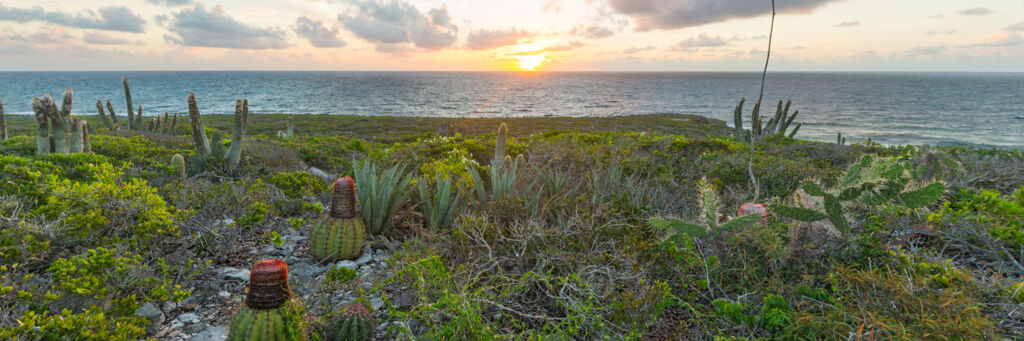
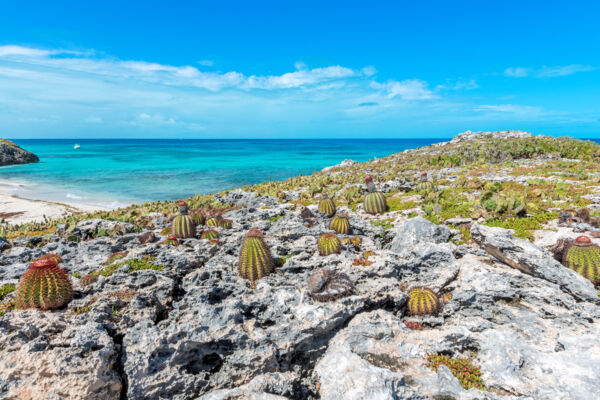
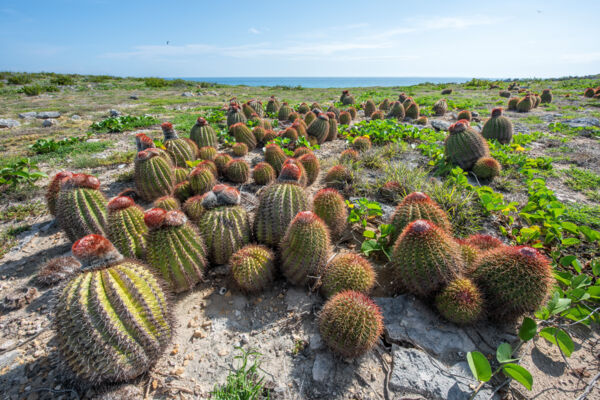
Due to the lack of competition, Turk's head cacti are typically found in exposed and dry regions. In the Turks and Caicos, these areas are usually naturally eroded limestone bedding landscapes, or in some cases hard sandy dunes.
Unfortunately, the cactus has largely disappeared from the main populated islands. The majority of existing plants are located on East Caicos and Big Ambergris Cay, with small clusters on Middle Caicos and a select few other cays.
Landscaping and Cultivation
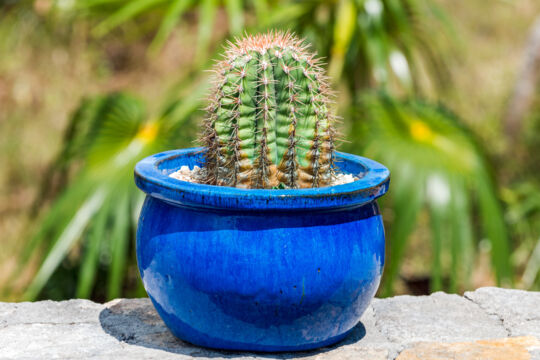
In a dry tropical setting such as the Turks and Caicos, the Turk's head cactus is a very low maintenance plant.
The cacti favor full sunlight and a sand and gravel mixture. Avoid the rich soil that most plants thrive in.
The greatest mistake when raising the Turk's head cactus is overwatering. In most situations, normal precipitation is sufficient.
Pirate Islands and the Turks and Caicos Name
A commonly held misconception is that the Turks and Caicos is named after the Turk's head cactus. In reality, the nation’s name is likely derived from the pirates and buccaneers who used to lurk in the islands.
In past centuries, Islamic pirates, slavers, and corsairs preyed on the coasts and waters surrounding Europe, the Mediterranean, Africa, and parts of southwestern Asia.
Due to these Barbary pirates, Turk was used at the time as a synonym for pirate.
An early European mapmaker, his name lost to history, marked what is now the Turks and Caicos with a variant of Turks Islands as a warning to travelers.
The word Caicos is an adaptation of the Taíno word for archipelago.