
Ocean Water Temperature in Turks and Caicos
The Turks and Caicos enjoys excellent ocean water temperature year-round, with an annual average range of 78° F to 85° F (26° C to 29° C), which is about the range that recreational swimming pools in the United States are typically kept at. The water typically reaches its lowest temperature in February, and is warmest in August or September.
Many forecasts and sources that state water temperature for the Turks and Caicos are referencing open ocean surface water temperature. The actual temperature experienced at the beach will almost always be a little higher due to natural heating by the sun.
Wind chill also plays a large part in how effectively cold the overall experience is at the beach, and on low wind days and at sheltered locations, few would complain about water temperature, even during the annual lows.
Average Water Temperature By Month

Beaches and Locations with Warmer Water
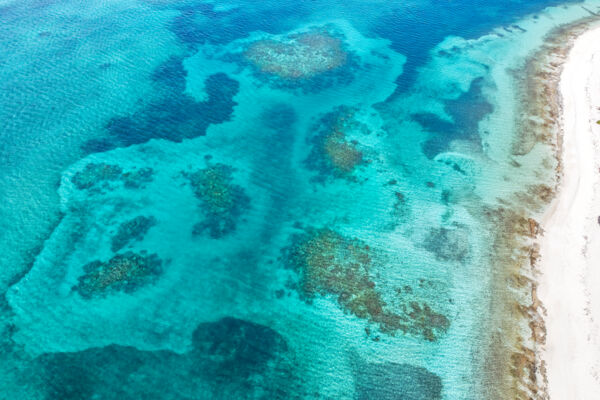
There can be quite a difference in water temperature between beaches on the same island. In the shallow and sheltered bays, where there’s less exchange with the open ocean, natural heating by the sun raises the temperatures. Midday, this difference is typically about 5°F (3°C) between Grace Bay Beach and Sapodilla Bay.
Providenciales
On the island of Providenciales, Sapodilla Bay, Taylor Bay, and Turtle Tail Beach typically have the warmest water. Long Bay Beach is also typically a bit elevated over the island’s norm. Northern coast beaches such as Grace Bay and The Bight Beach have deeper depths off the beach and are more exposed to the deeper open ocean off the Caicos Islands plateau, and thus have cooler water temperatures.
The large and shallow lagoon at Half Moon Bay in the Princess Alexandra National Park, located in the Caicos Cays close to the northeast of Providenciales, is another spot with warmer water. This stunning area is a popular destination on boat excursions.
There can also be significant difference in temperature at the same beach depending on the exact location, which is due to tidal change. Smith’s Reef, for example, can have a surprising contrast between the water directly off the beach and the water in the deeper channels between the reefs. This is due to natural water movement, and as the tide goes out the channel will be warmer as the shallow Turtle Cove drains, and cooler on the incoming tide.
Grand Turk
Grand Turk doesn’t have the complexity of coastline, shallows, and bays that the larger Caicos Islands have, so the water temperature differential between its popular beaches is minimal. Governor’s Beach, Cockburn Town Beach, and the Cruise Center Beach, which are the three most popular beaches on the island, are all on the general southwestern side of the island, and will effectively be the same.
North Caicos and Middle Caicos
North Caicos and Middle Caicos have complex coastlines and many beaches, but the shallow and sheltered beach locations tend to be near the channel systems that divide the islands and cays, where high water flow due to tides typically results in marked changes in water temperature throughout the day. On incoming tides, these spots will be cooler as the water flows in from the open ocean, and on outgoing tides it’ll be the opposite, and the warmed water from the Caicos Banks and wetlands flows back out to sea.
Bambarra Beach can be a little warmer than some of the other popular coasts, yet this difference isn’t as pronounced as at a location such as Sapodilla Bay.
South Caicos
On South Caicos, Bell Sound and its Cove Beach are almost always warmer than the other coasts on the island, and often by a significant margin. This is due to the sound being largely surrounded by South Caicos to the south and east and being adjacent to the extensive and very shallow Stake Bank to the northwest. Consequently, water exchange with the open ocean is much more limited than at other beaches.