Turks and Caicos Fishing Licenses & Regulations
Fishing licenses are required when fishing in the Turks and Caicos. The only exceptions to the rule are children under 16, and recreational fishing for Turks and Caicos Islanders.
Fishing without a license can result in a $50,000 fine and 12 months' imprisonment (or both).
For visitors booking a fishing charter, these are typically included in your charter, but you'll want to confirm this. If you'll be fishing on your own, you'll need to purchase a license yourself.
This article largely covers recreational fishing for tourists and legal residents. Some rules are different for commercial fishermen, and more information can be obtained from the Department of Fisheries if you are a commercial fisherman.
Who needs a fishing license in Turks and Caicos?
Everyone, with the exception of children under 16, and also recreational fishing for persons with Turks and Caicos Islander Status.
Taking any marine species is considered fishing, whether traditional fishing with a pole and line, collecting conch or lobster, using a net, or any other means.
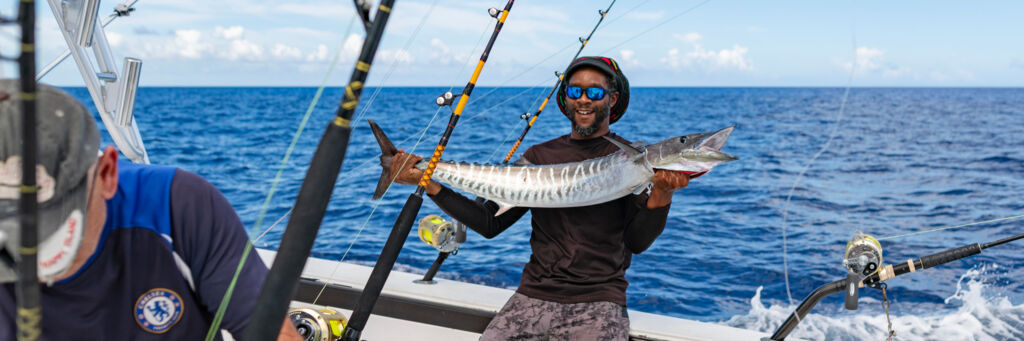
Note that you are considered 'fishing' if you are present on a boat with fishing equipment. It doesn't matter if you go on a fishing charter and only a few people in your group will be fishing–everyone on board requires a license (unless one of the two exceptions above applies).
Boat Registration
Any boat used for fishing must be registered and display the registration number on the hull. This applies even if you are only doing recreational fishing, or if you are a Turks and Caicos Islander.
Lionfish License
It’s also possible to obtain a license for hunting lionfish, an invasive fish species typically caught with a pole spear. These can be applied for at the Maritime Department. For tourists, it's generally a large hassle to obtain one of these licenses, so don't expect an easy process.
Where to Get a Fishing License and Costs
One-day and 30-day fishing licenses are available across Providenciales, including at all primary marinas and at the Maritime Department. Issuers of fishing licenses may ask to see government-issued photo ID of applicants.
Annual licenses are only for residents of the Turks and Caicos Islands and are not available for tourists. These are typically only sold at the Maritime Department.
- Turtle Cove Marina Office: +1 (649) 941-3781 - Turtle Cove
- Maritime Department: +1 (649) 338-4171 - South Dock Road
- Walkin Marine: +1 (649) 946-4411 - Old Airport Road, Downtown
- South Bank Marina Shop: +1 (649) 946-5600 - 1 Long Bay Highway, Long Bay
- South Side Marina: +1 (649) 946-4137 - 26 Turtle Tail Drive
- Blue Haven Marina: +1 (649) 946-9910 - Leeward
- Scooter Bob's Car Rental (one-day licenses only): +1 (649) 946-4684 - Suzy Turn Road, Turtle Cove
Fishing License Costs
One-day licenses cost $10 when purchasing directly from the government, and $10–15 from marinas, charter companies, and other businesses (2026 price). Thirty-day licenses cost $30 from the government, and $30–35 from businesses. Annual licenses are $60, and typically available only from the government.
Fishing Seasons and Restricted Species
Several popular local fish and marine species have legal seasons, most notably lobster. Many others have minimum and/or maximum sizes.
The consumption of turtle was historically practiced in the Turks and Caicos, but has fallen out of favor with recent generations.
| Fishing Seasons and Legal Size | ||
| Species | Open Season | Notes |
| Lobster | August 1–March 31* | Minimum 3.25 inches (8.25 cm), excluding antennae |
| Nassau Grouper | March 1–November 30 | 21–35 inches (53–89 cm) for sports fishers |
| Stone Crab | October 16–May 31 | Minimum 4 inches (10 cm) claw length |
| Conch | Open Year-Round | Minimum 7 inches (18 cm) shell length |
| Hawksbill Turtle | April 1–July 31 | 18–24 inches (46–61 cm) shell length |
| Green Turtle | Open Year-Round | 18–24 inches (46–61 cm) shell length |
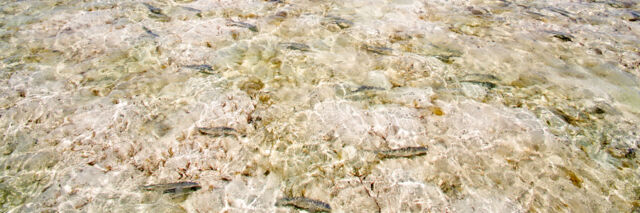
| Bonefish | Open Year-Round | Minimum 20 inches (51 cm) |
| * Lobster Dates: If August 1 falls on a Sunday, open season begins on August 2. If April 1 coincides with Good Friday or a Sunday, open season ends March 30. | ||

Fishing Regulations
It is illegal to use scuba equipment, a pole spear, a speargun, or a Hawaiian sling for fishing in the Turks and Caicos, whether recreational or commercial. The only exception to this is that provided the fisherman obtains a permit, a Hawaiian sling, pole spear, or scuba equipment may be used solely for catching invasive lionfish.
Be advised that all persons on a boat are jointly responsible for any illegal fishing activity on their vessel. If you are on a charter and see illegal activity, whether fishing in a national park, illegal collecting of conch, or use of a pole spear for anything other than lionfish, demand that activity stop and report the company to the Fisheries Department.
Where can I fish?
Fishing is only legal outside of National Parks and other protected areas. For DIY fishermen, be advised that internal waters (ponds/lakes) on several of the islands are also protected.
If you are fishing as part of a charter, your company and captain should know the areas. However, it is common for some smaller companies to take their guests into protected areas, as the catch can be better. You may wish to confirm that you are not fishing in a protected area.